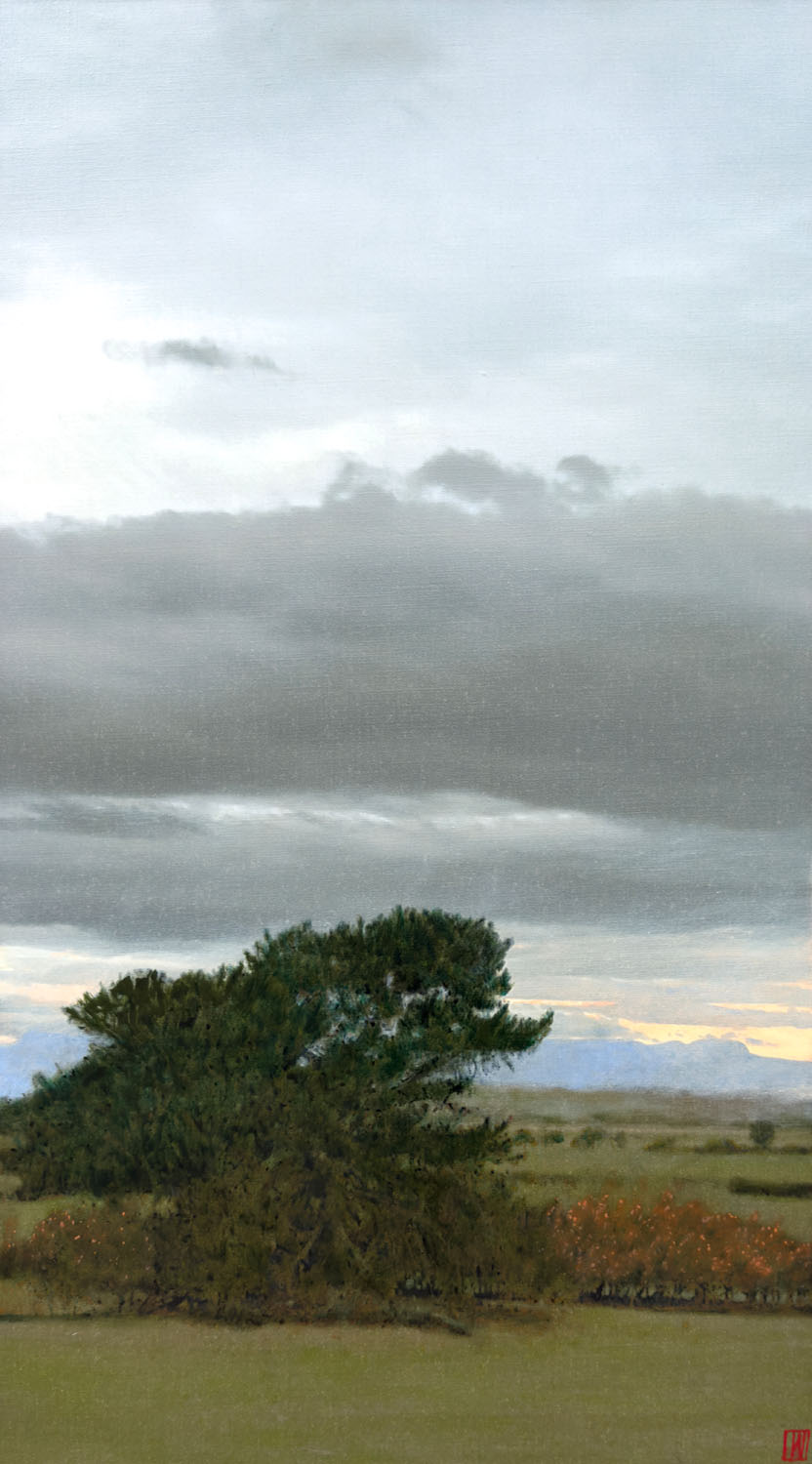
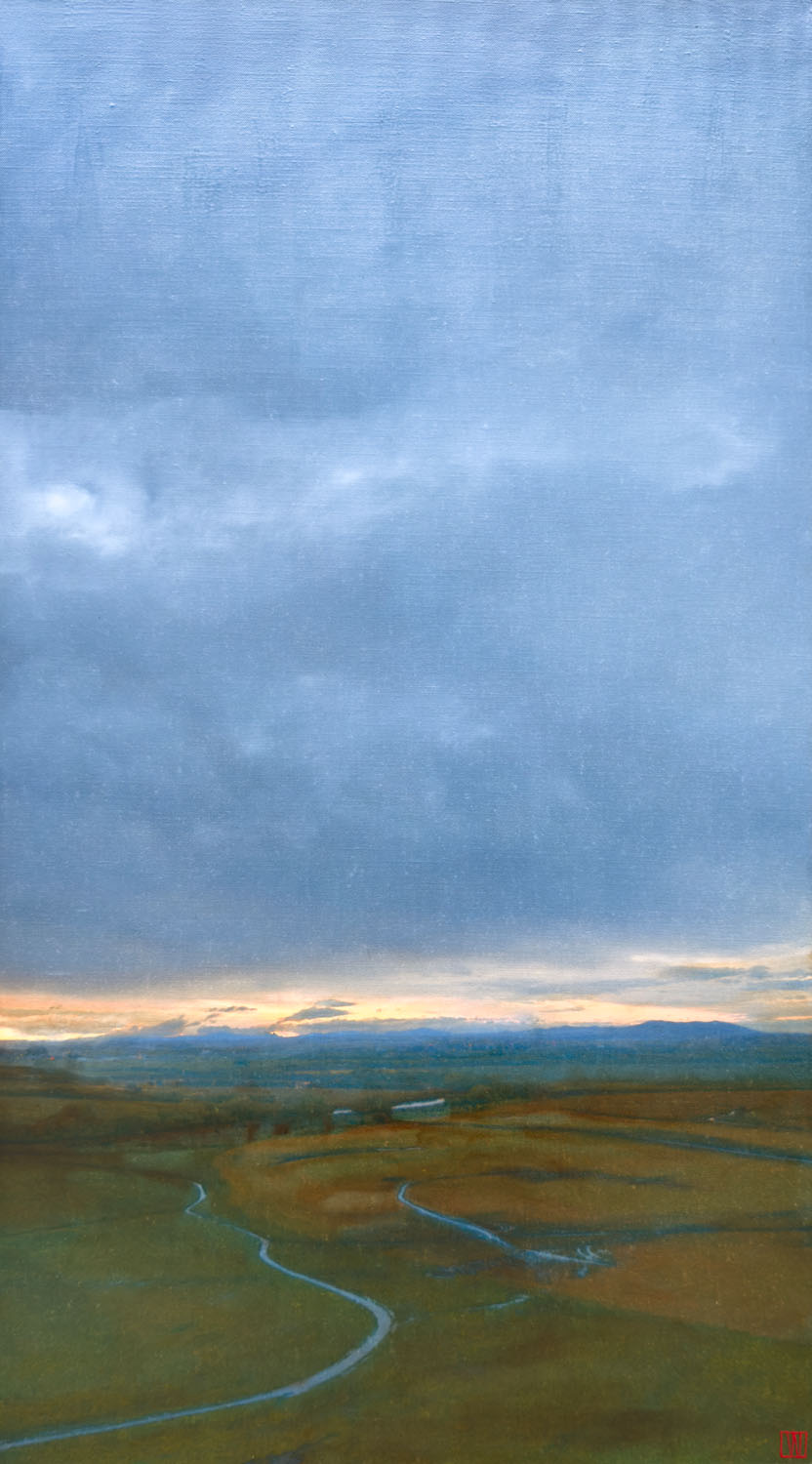
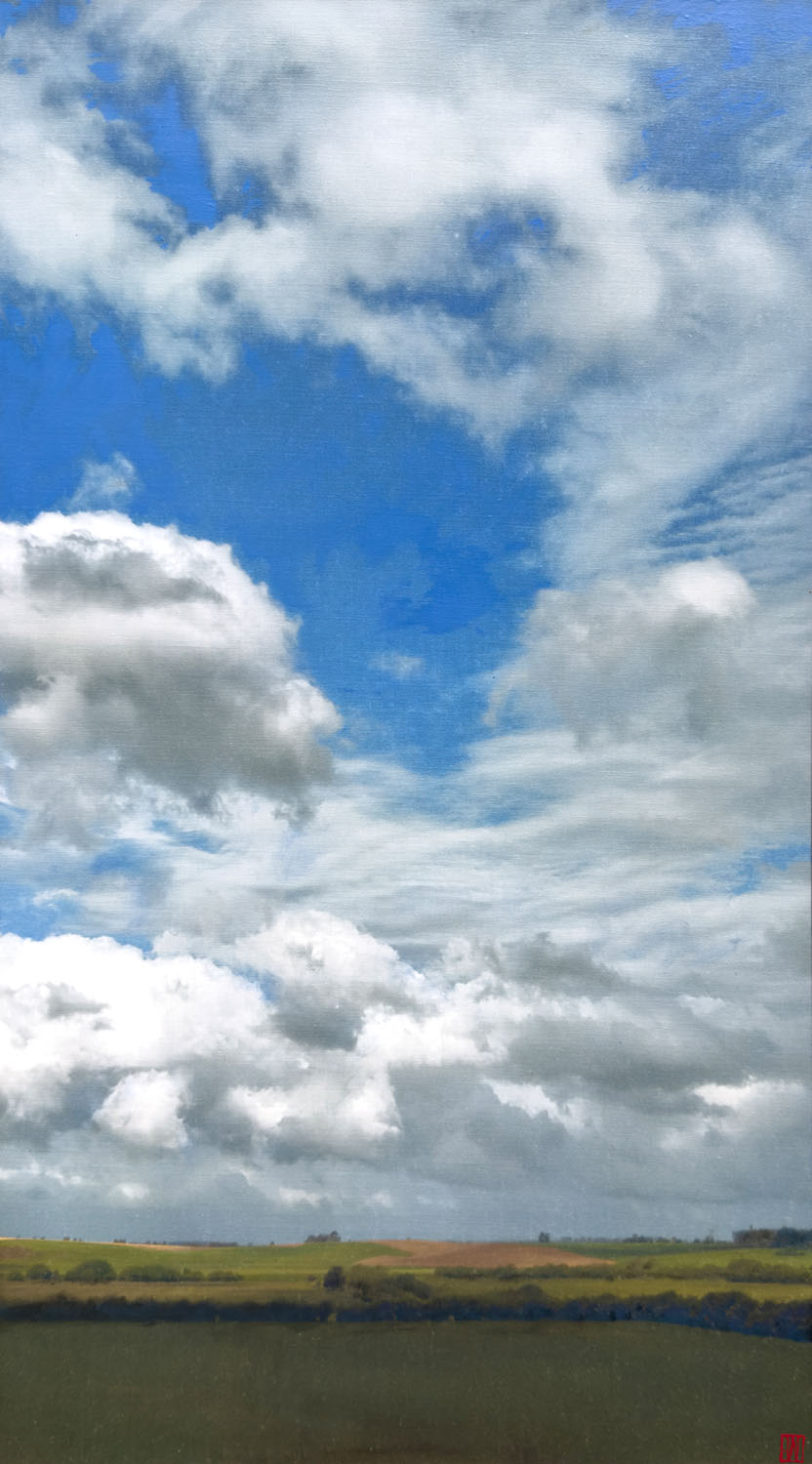
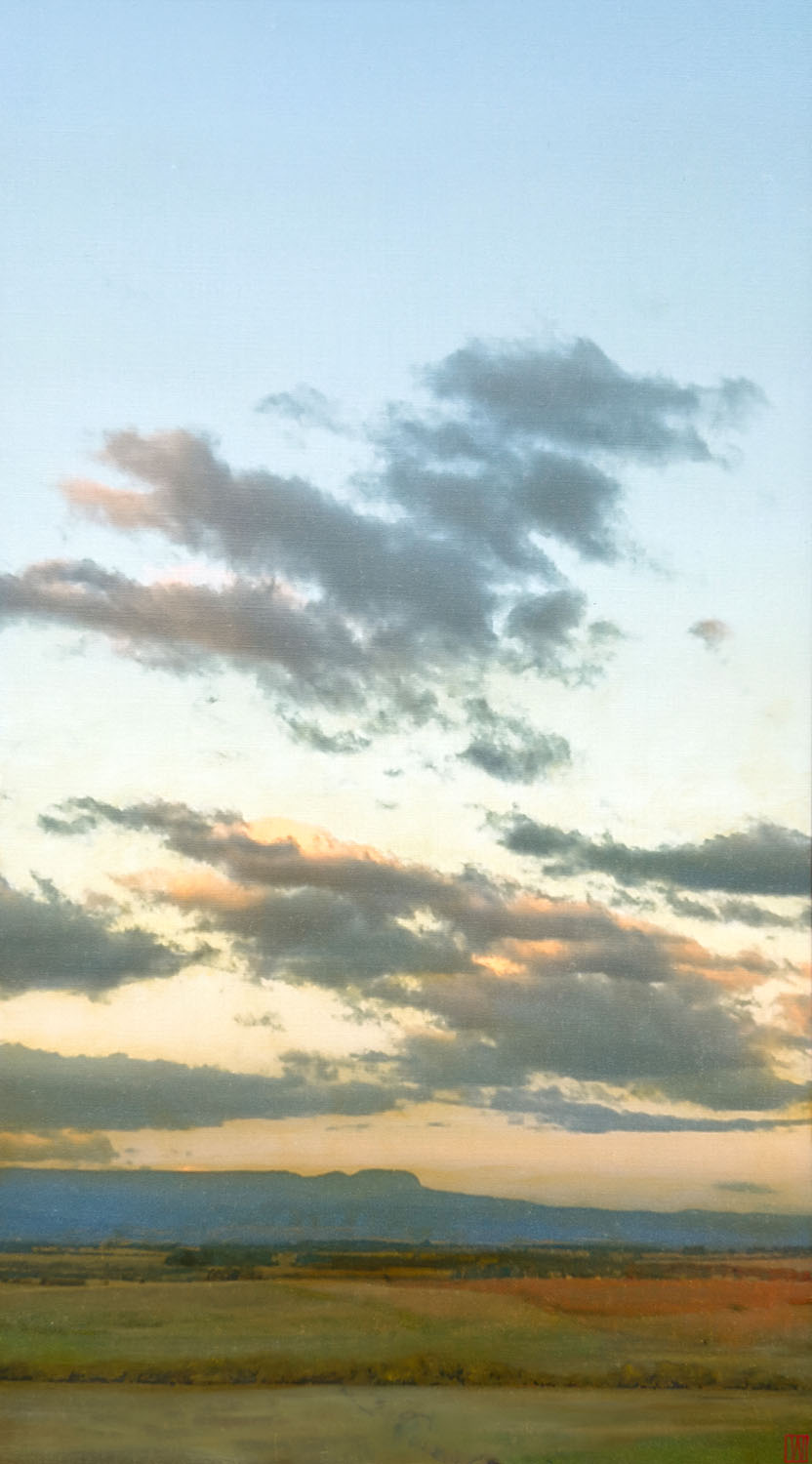
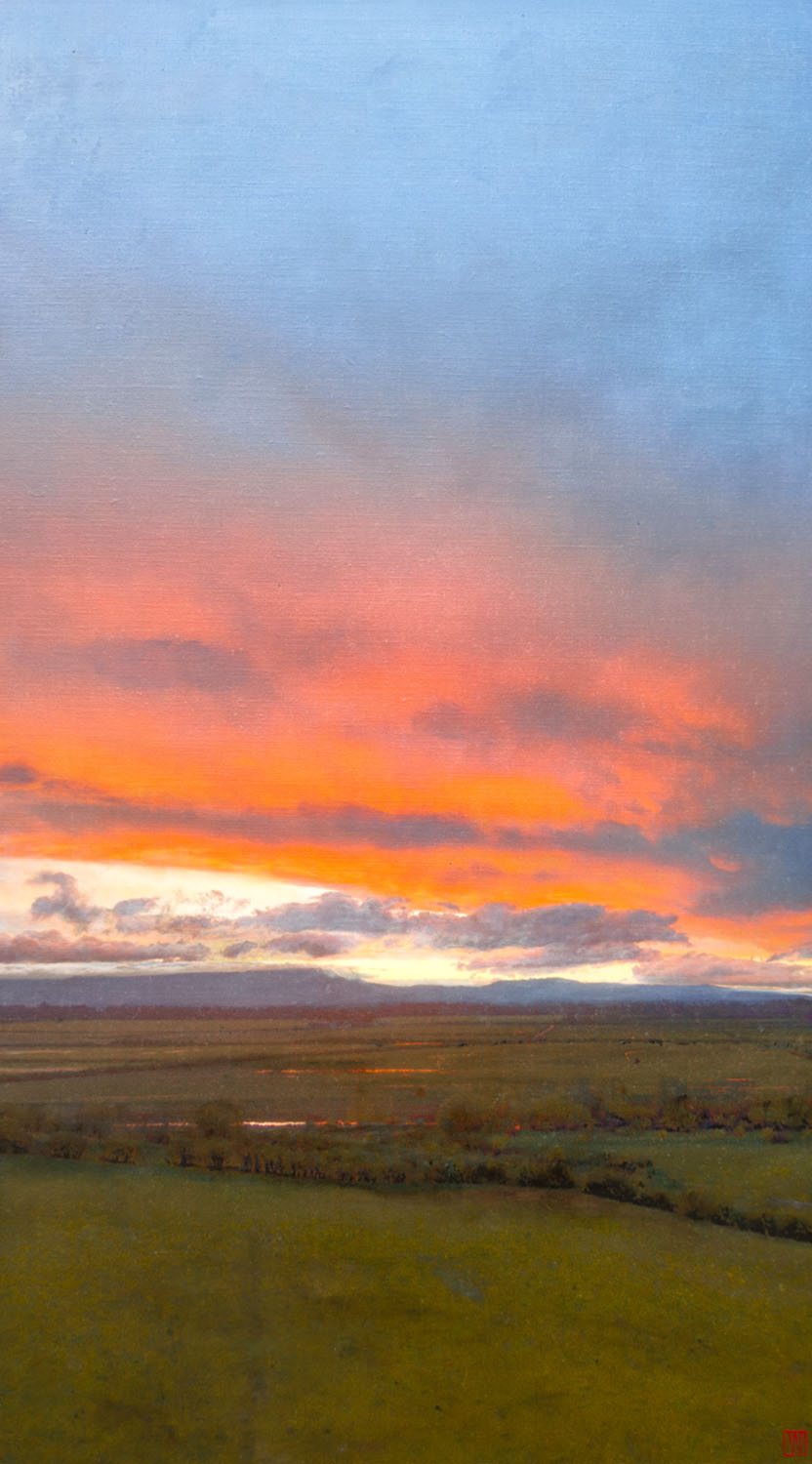
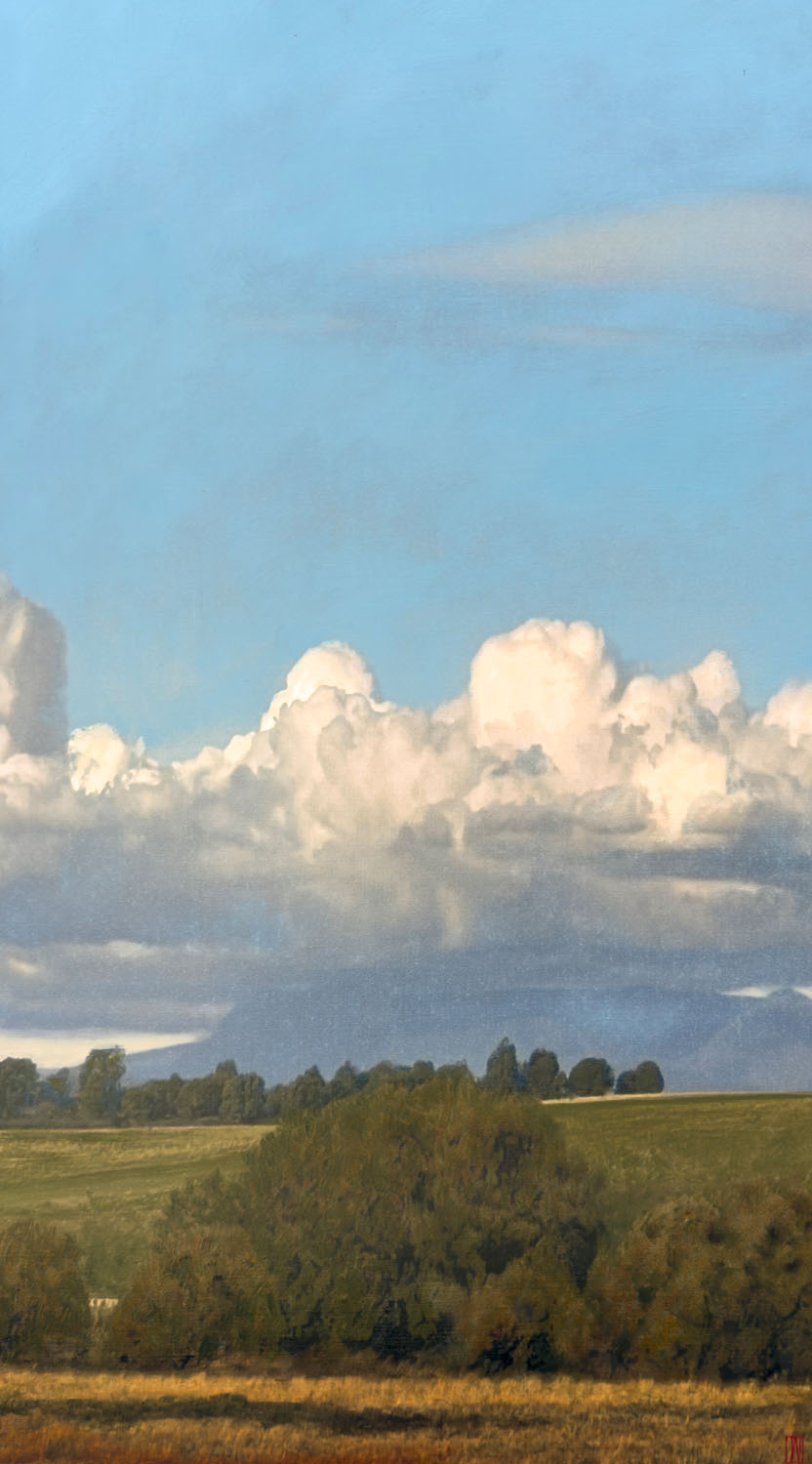
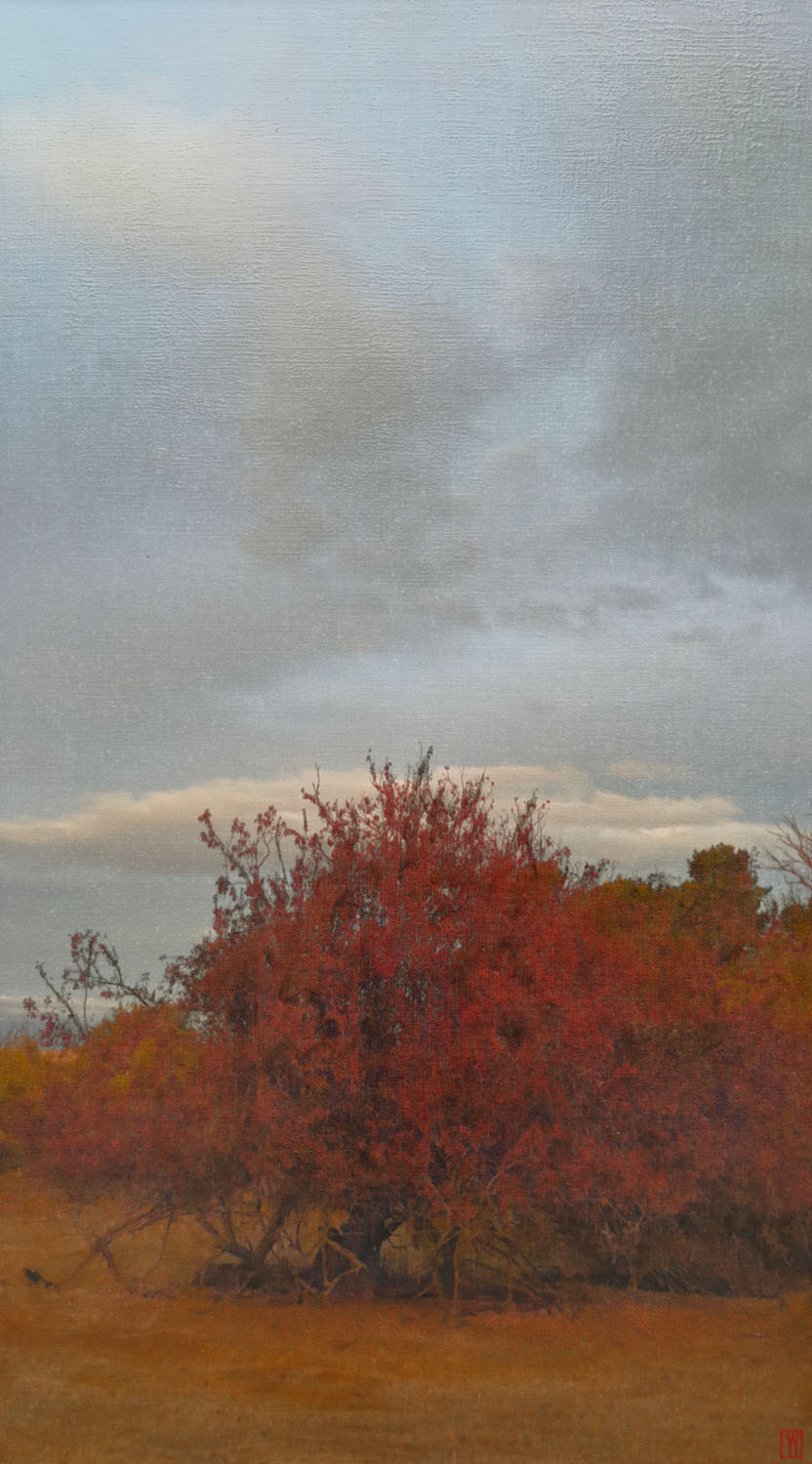
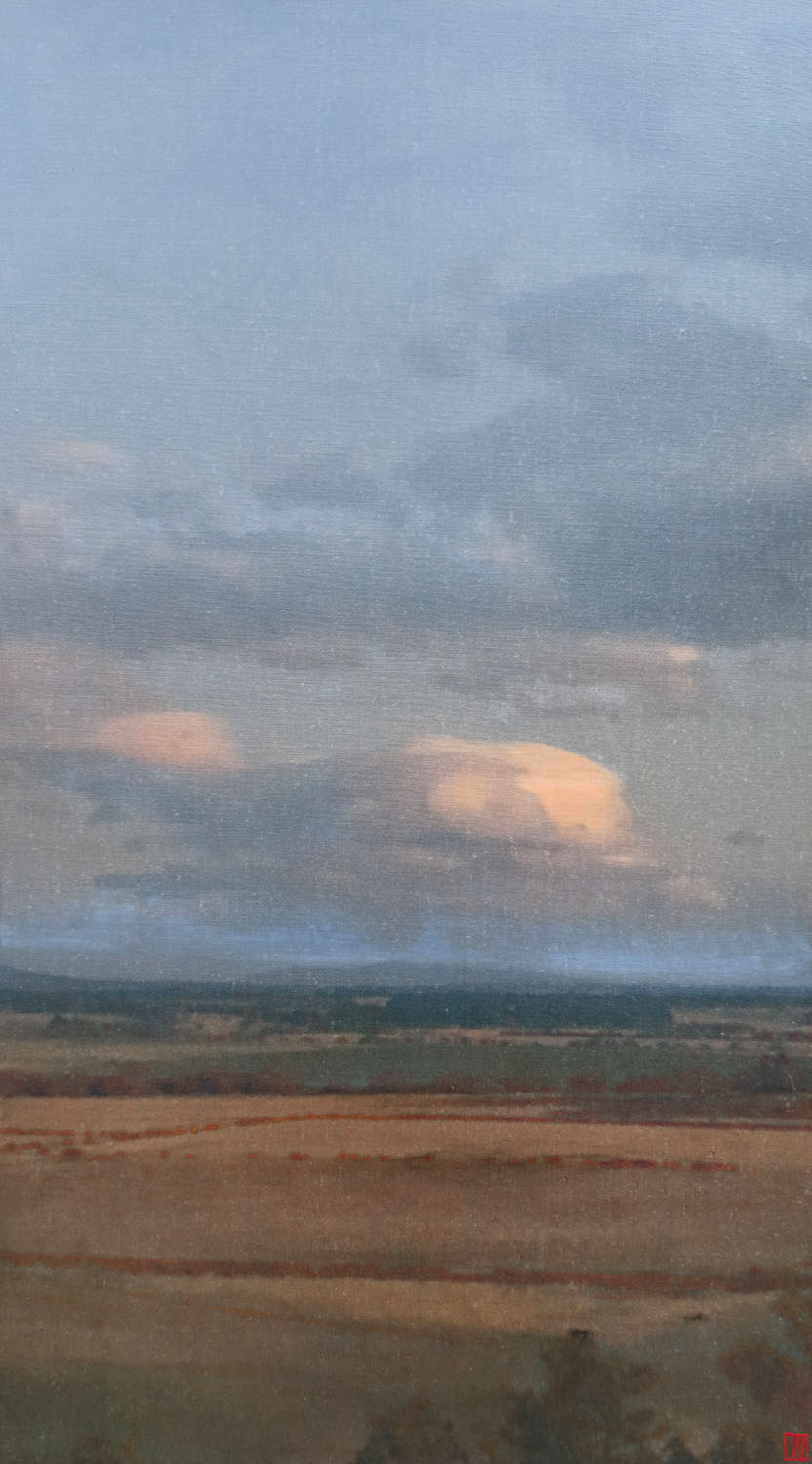
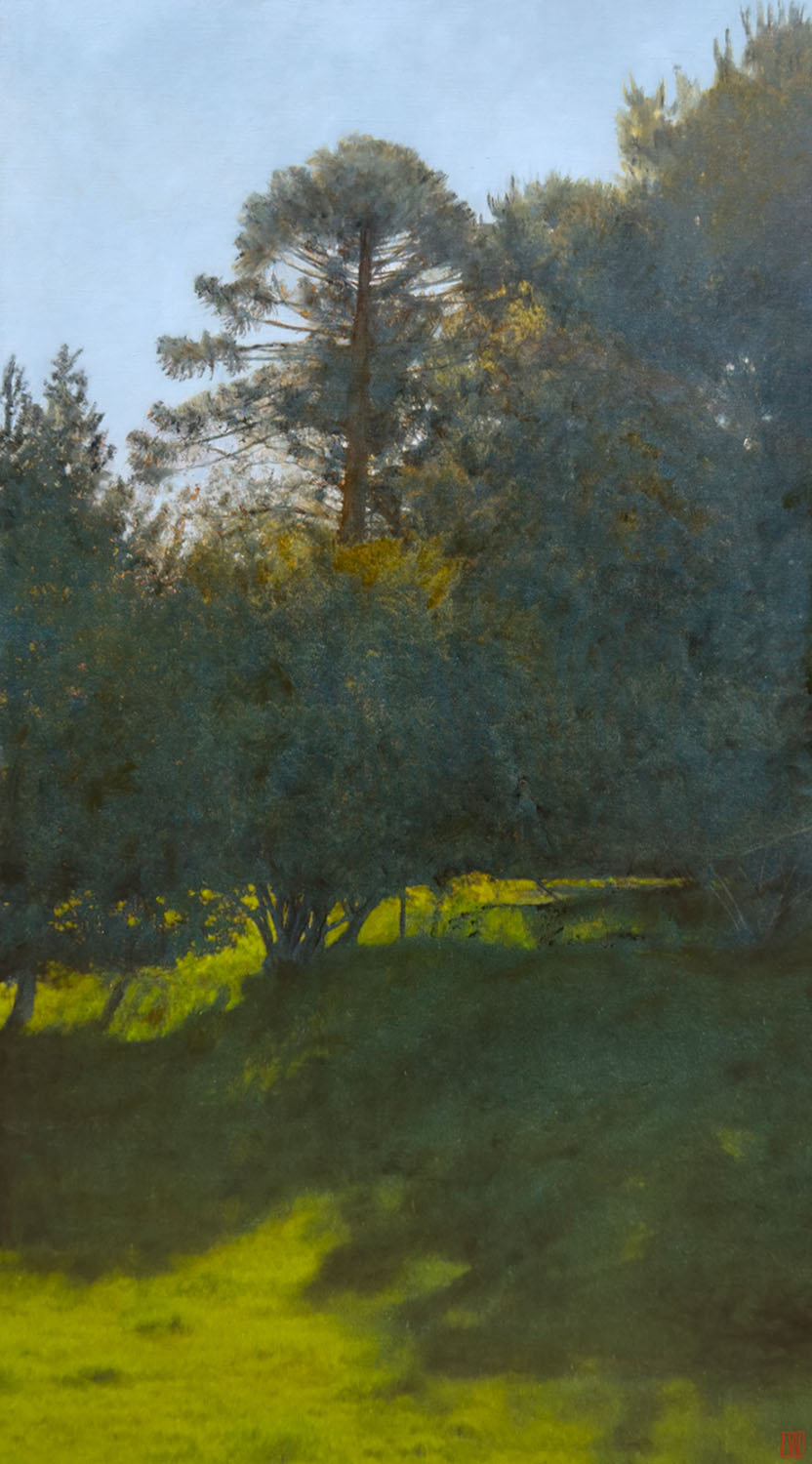
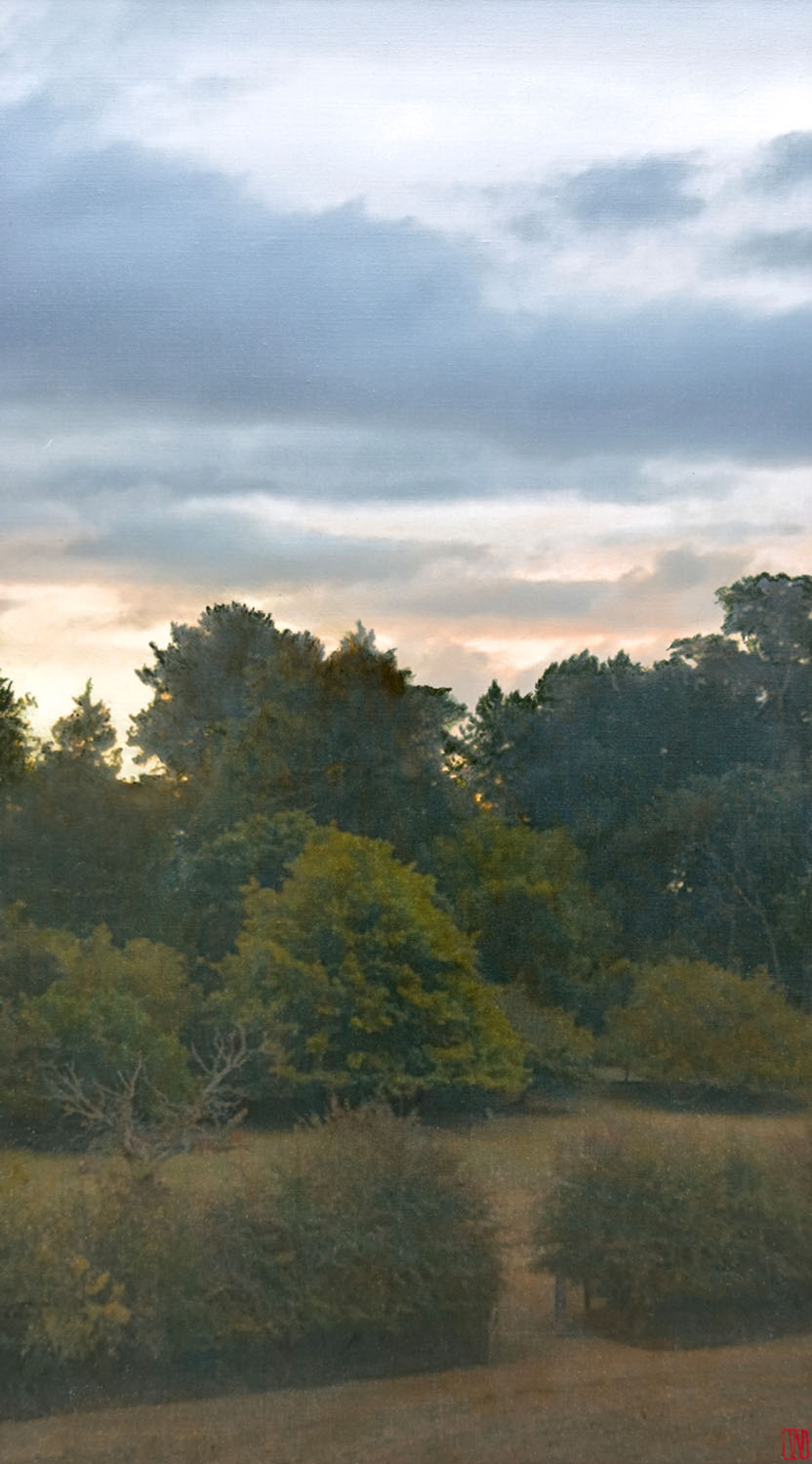
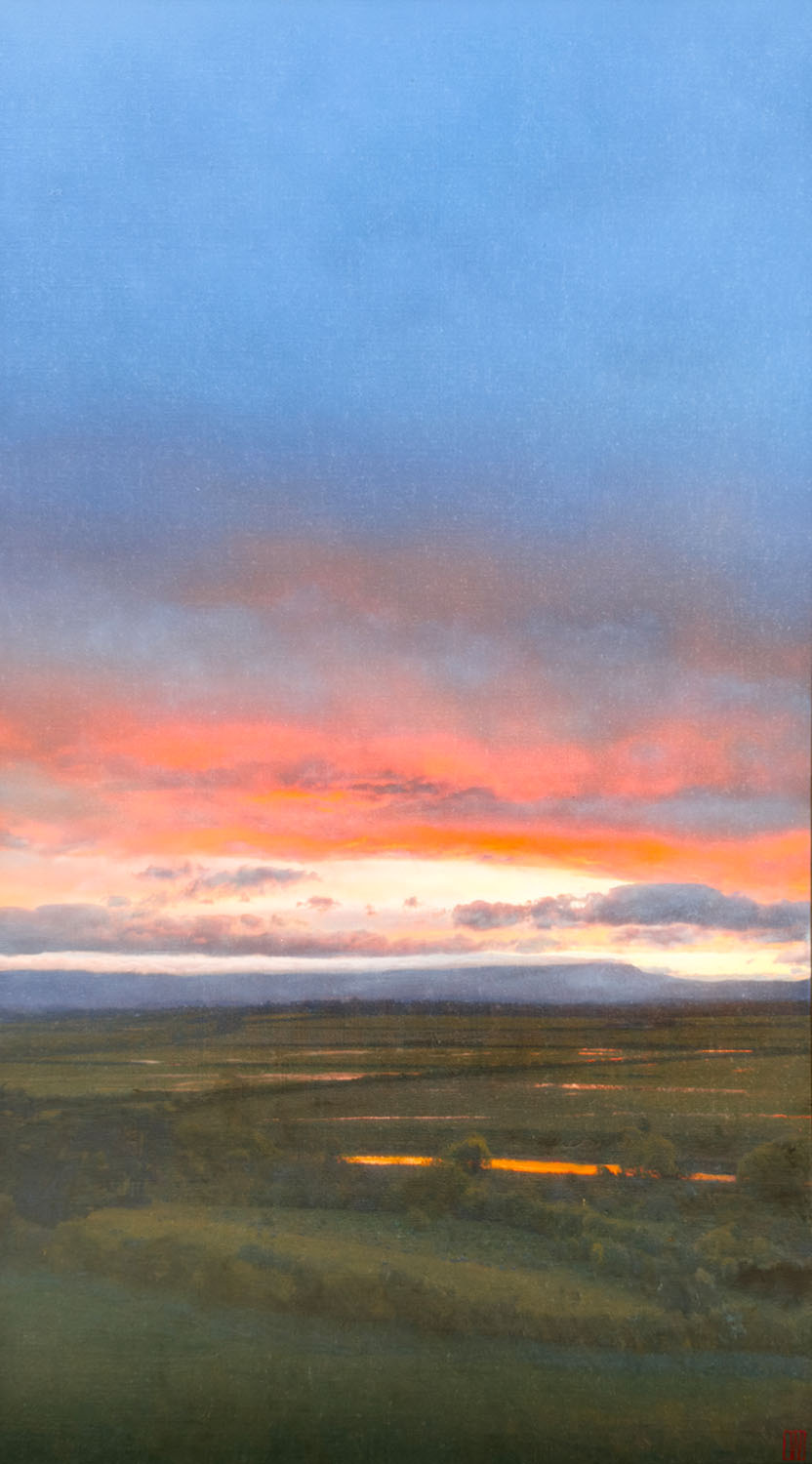
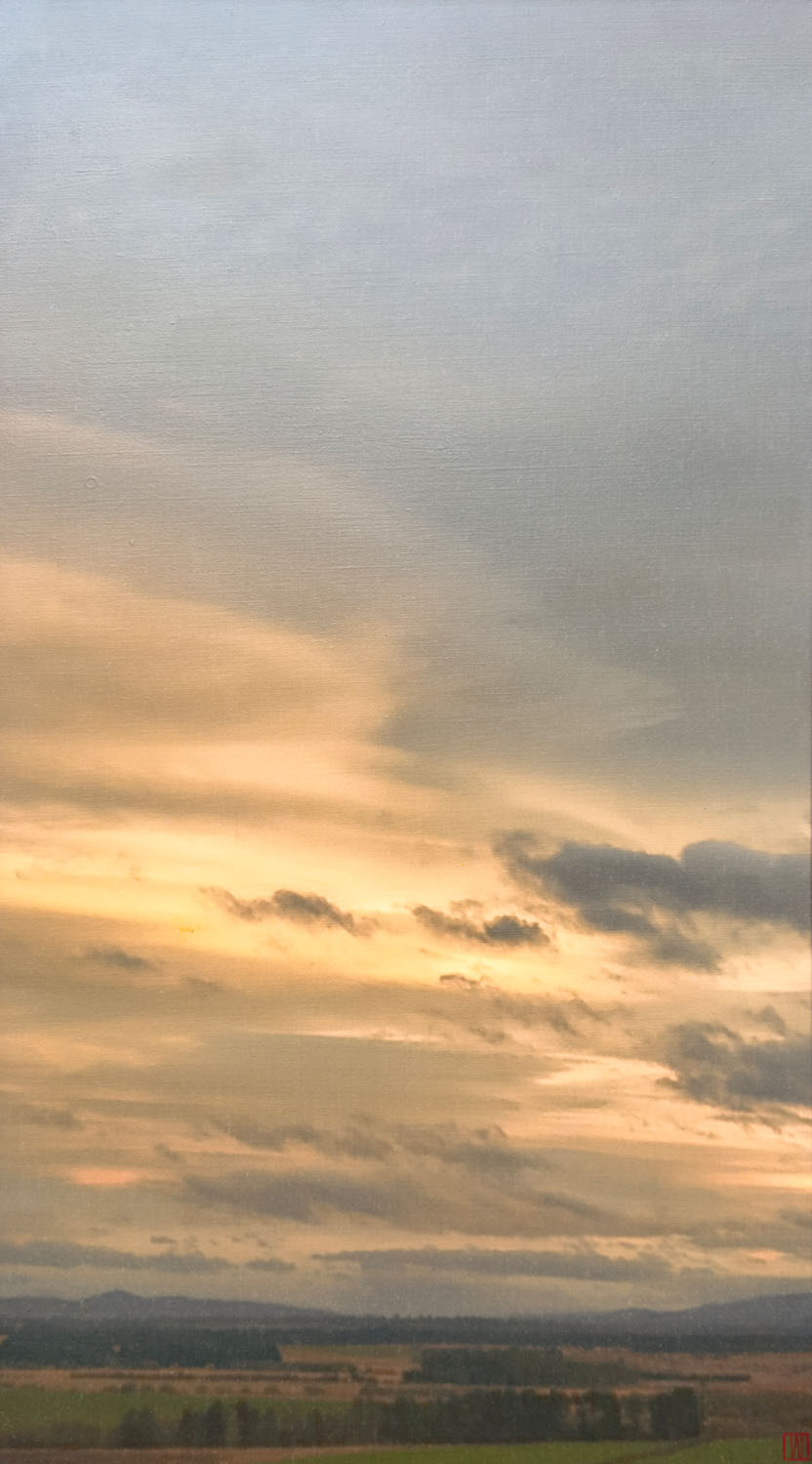
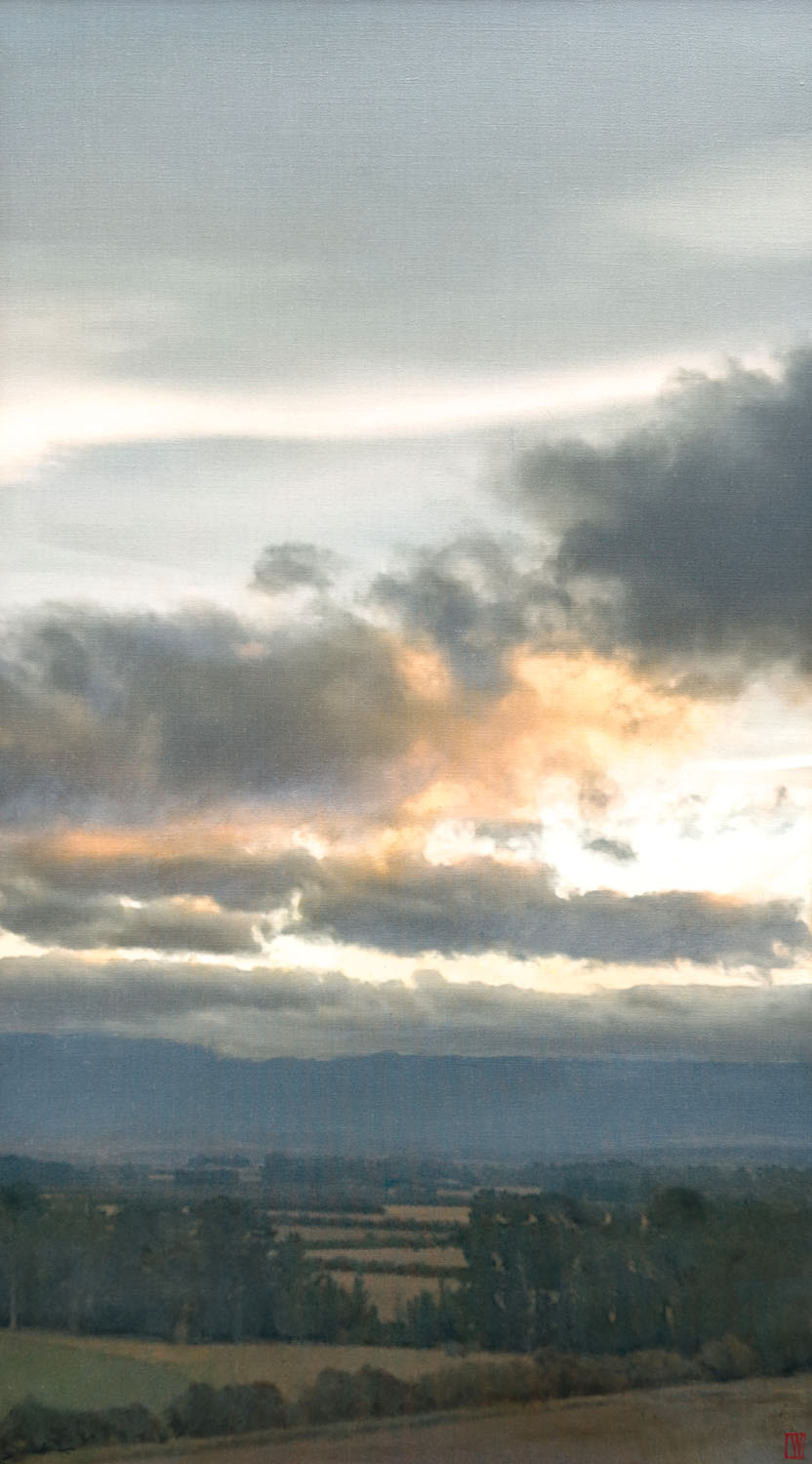
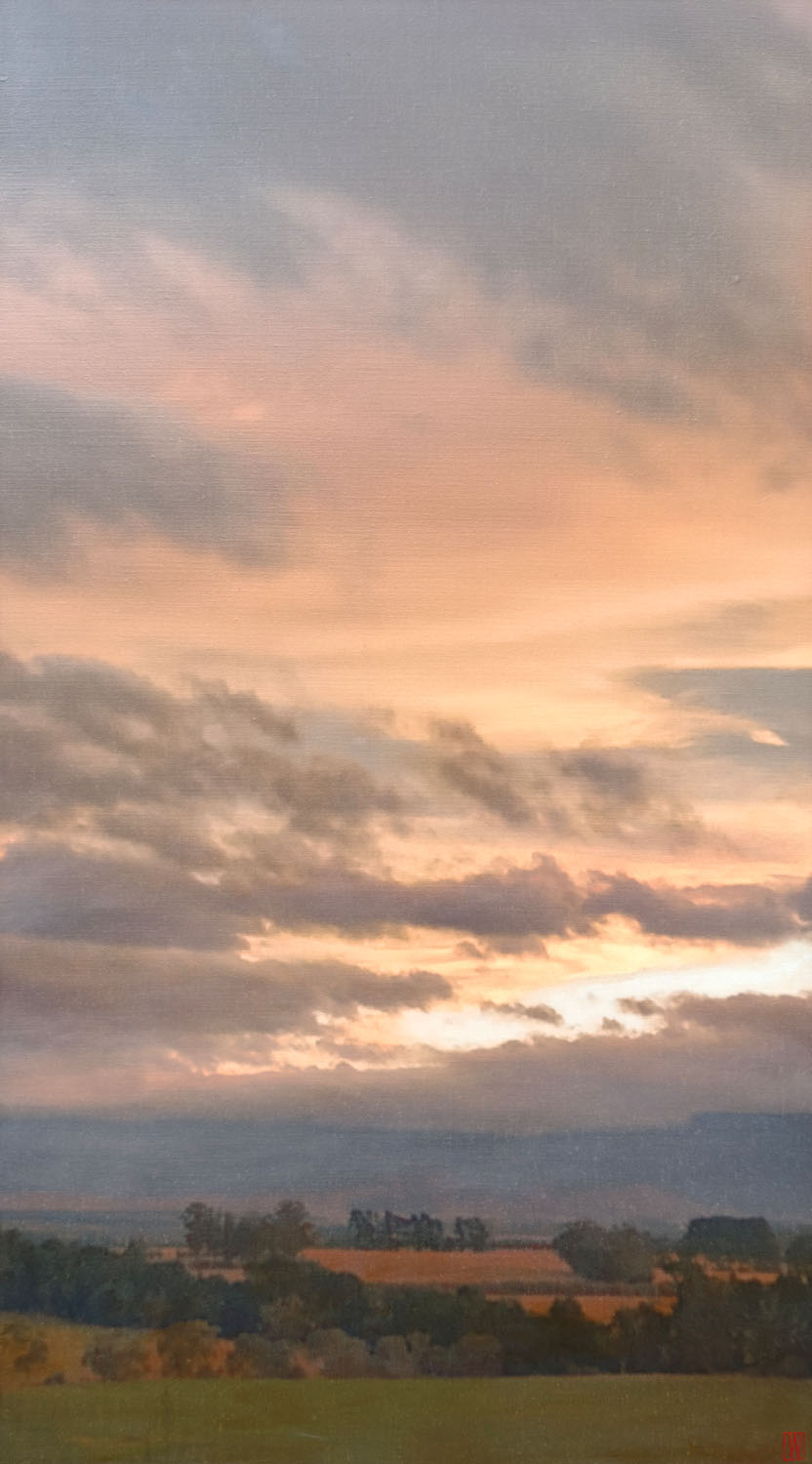
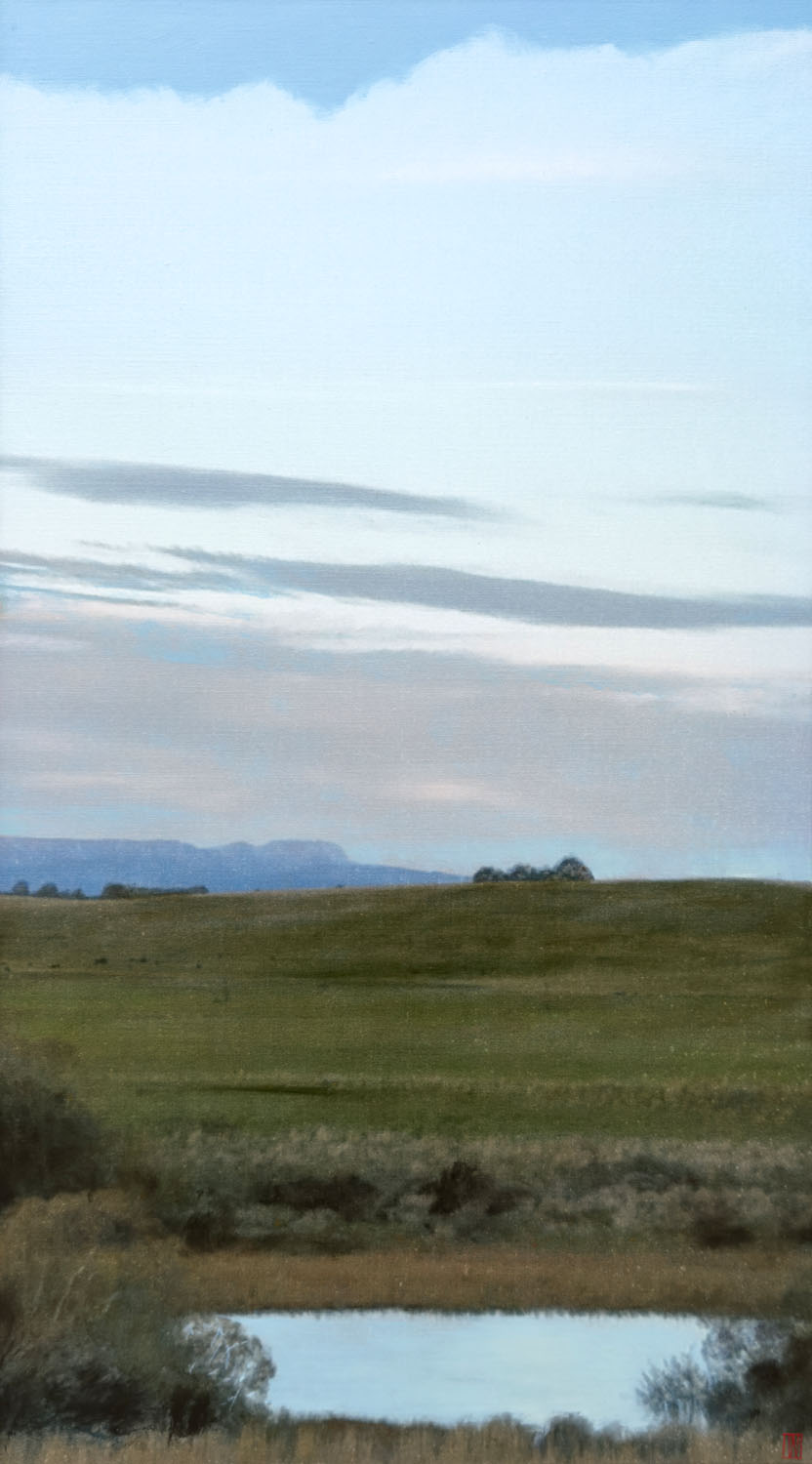
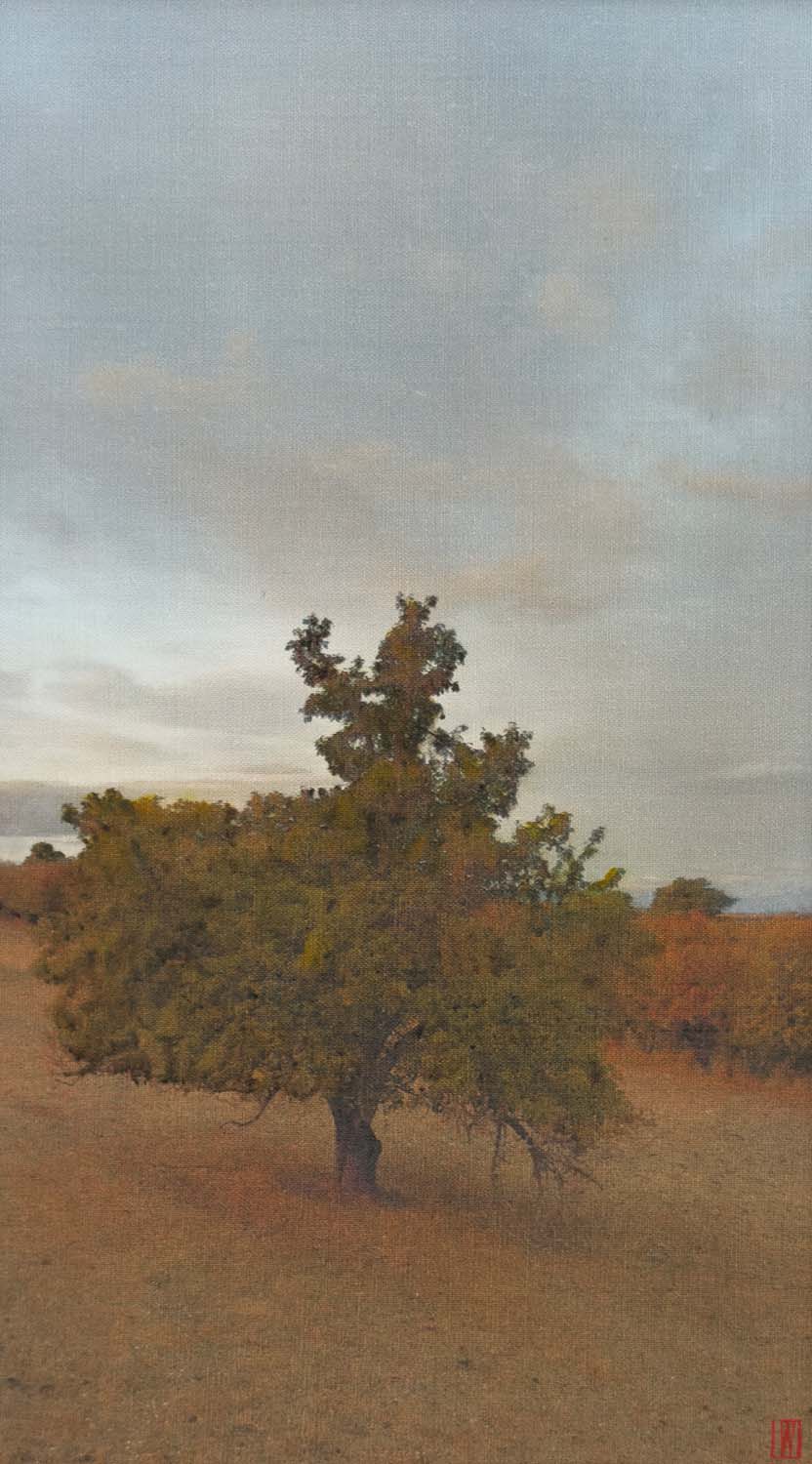
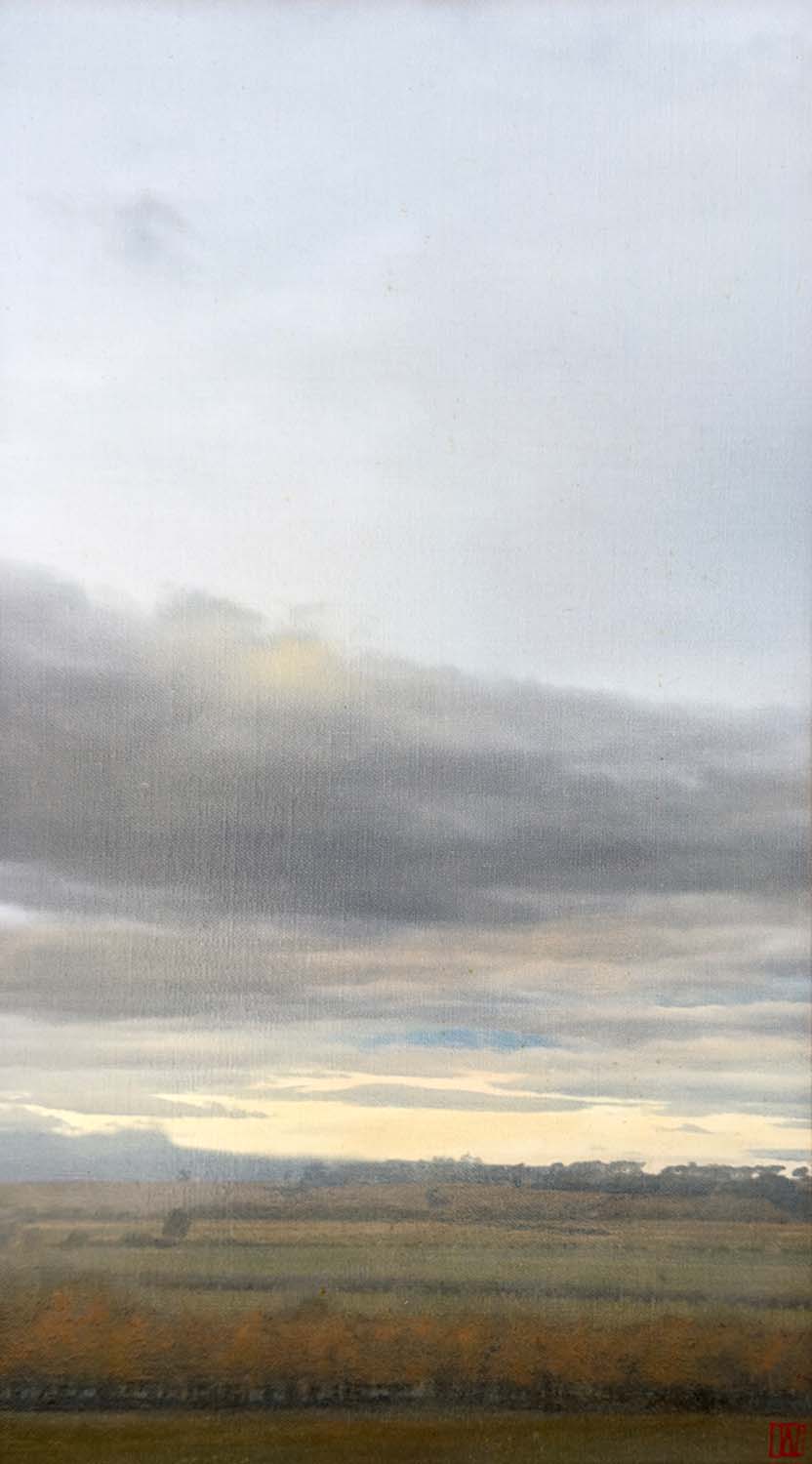
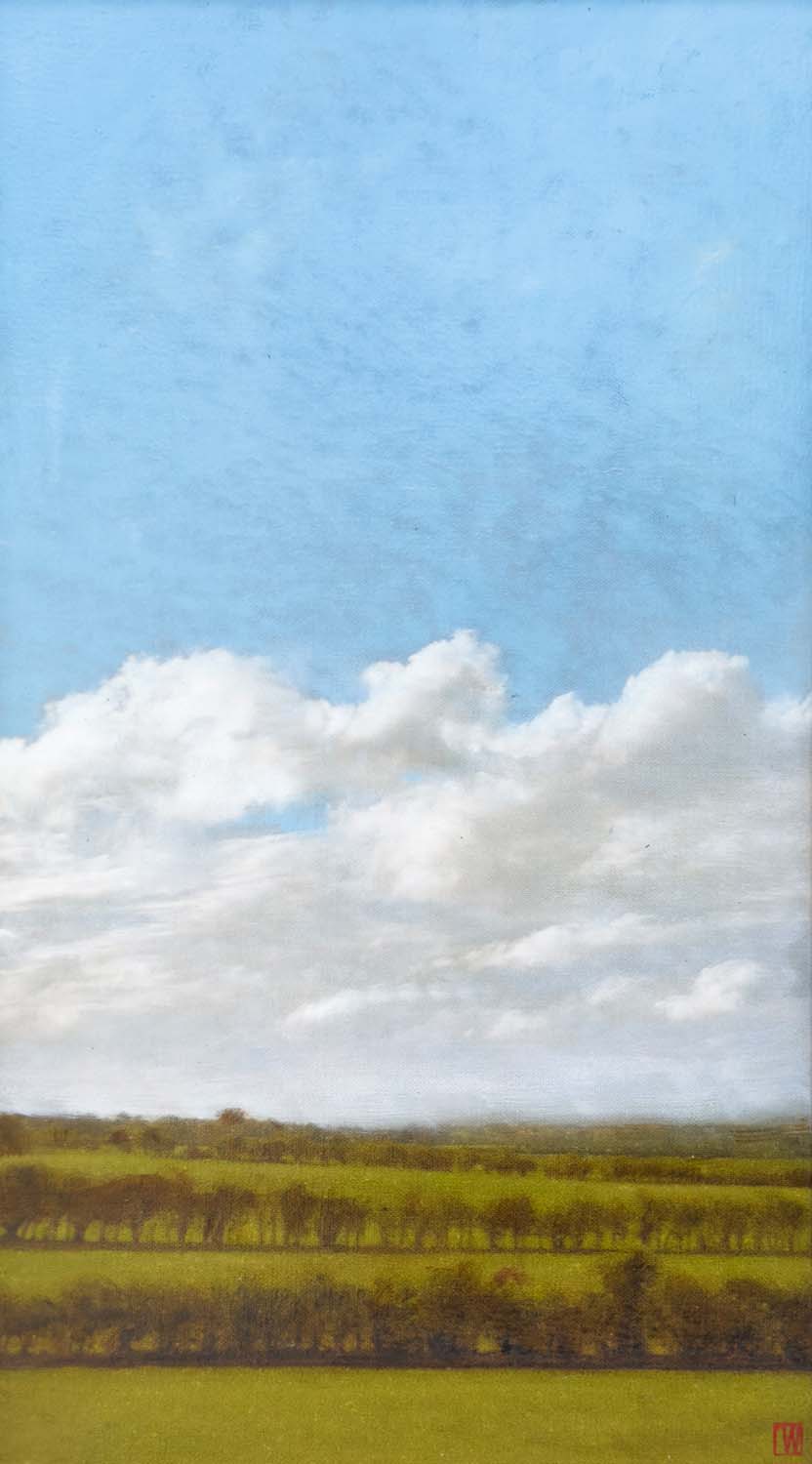
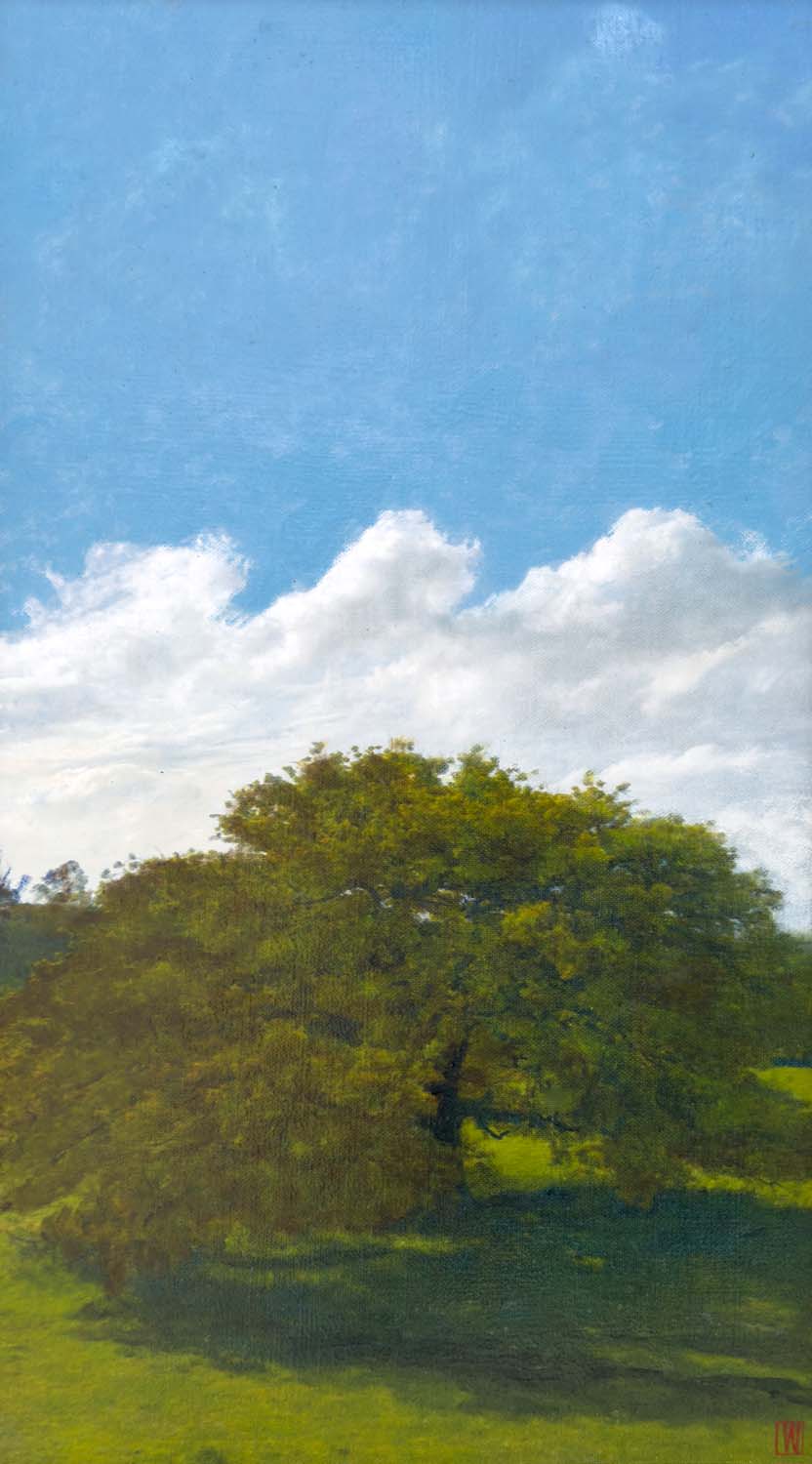
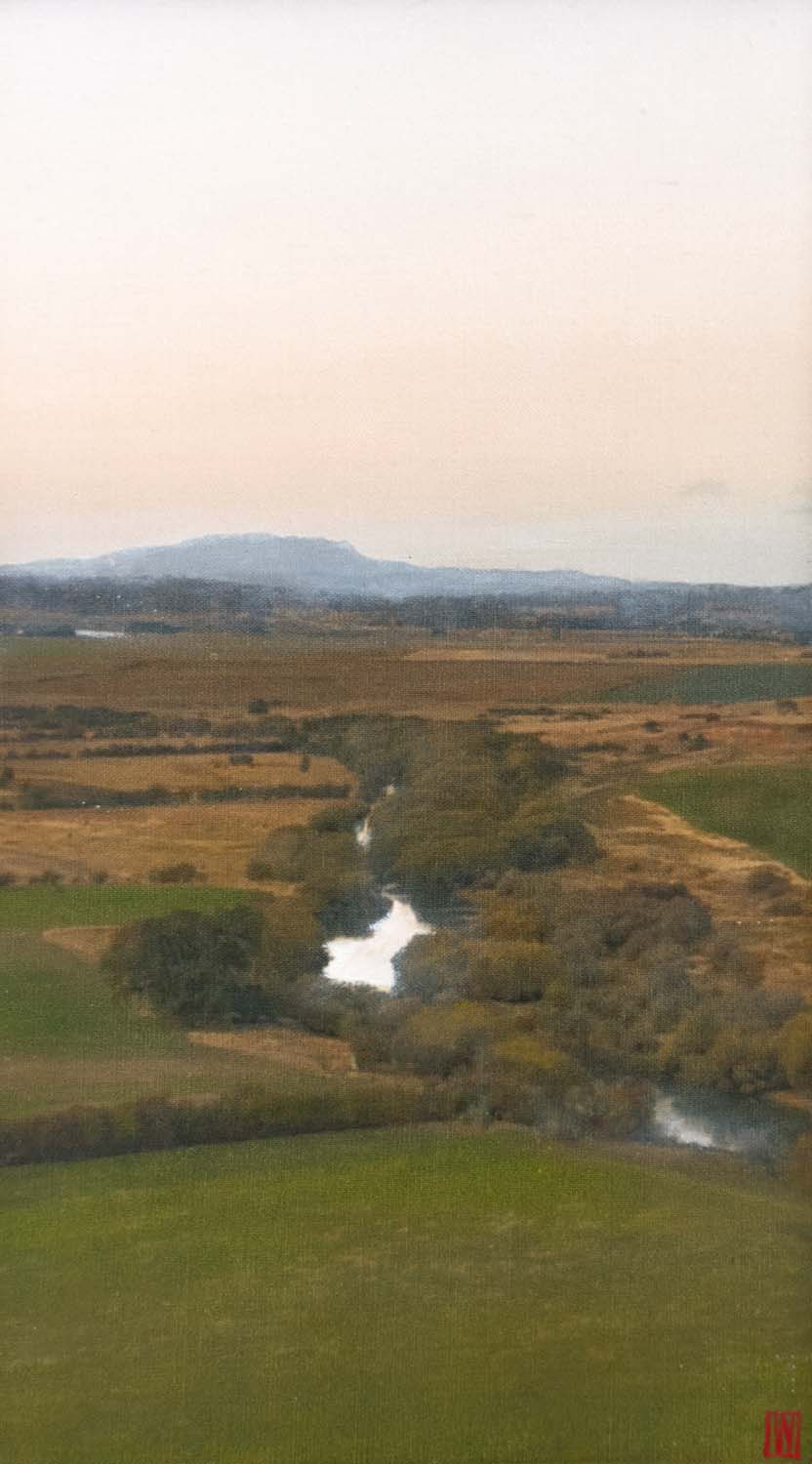
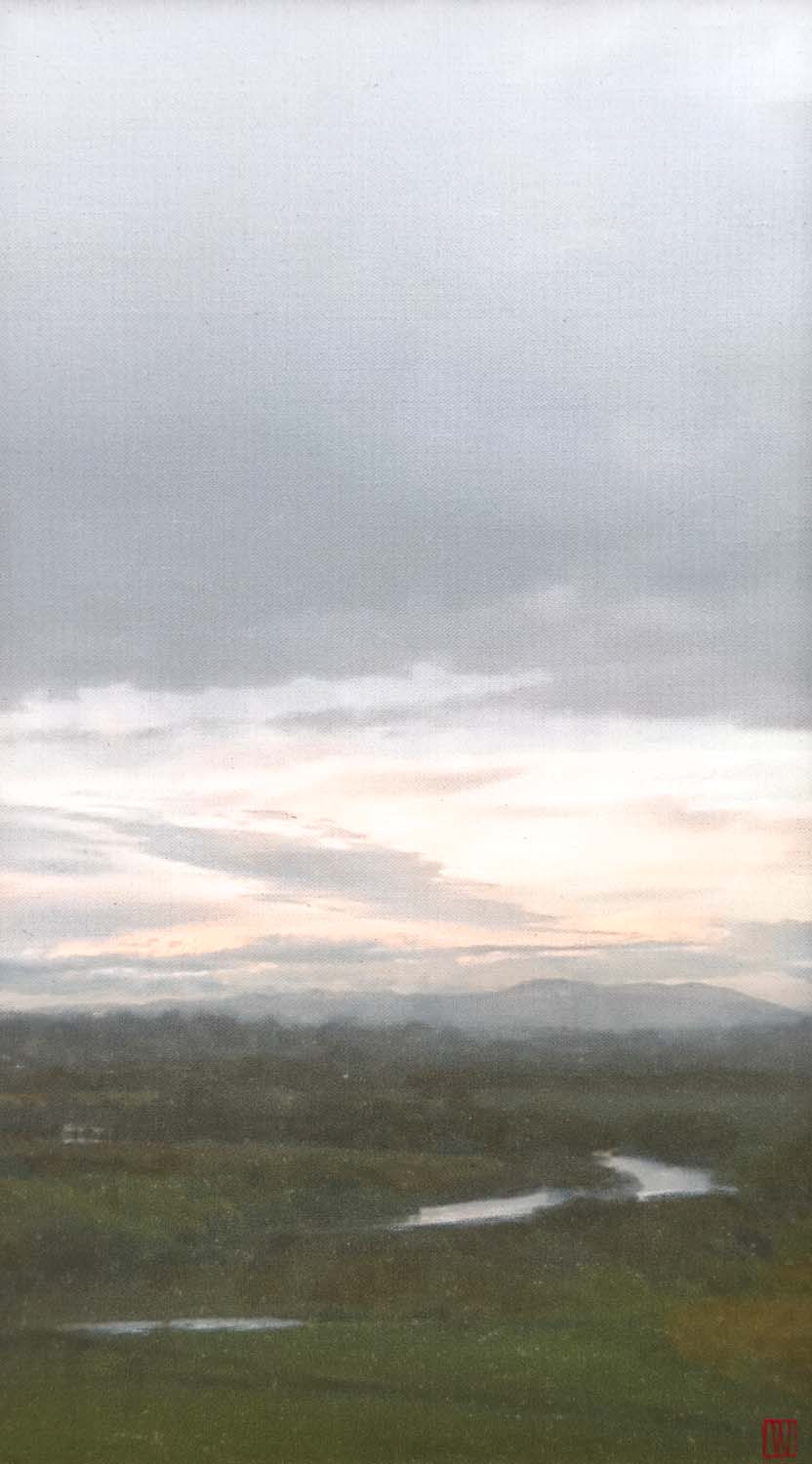
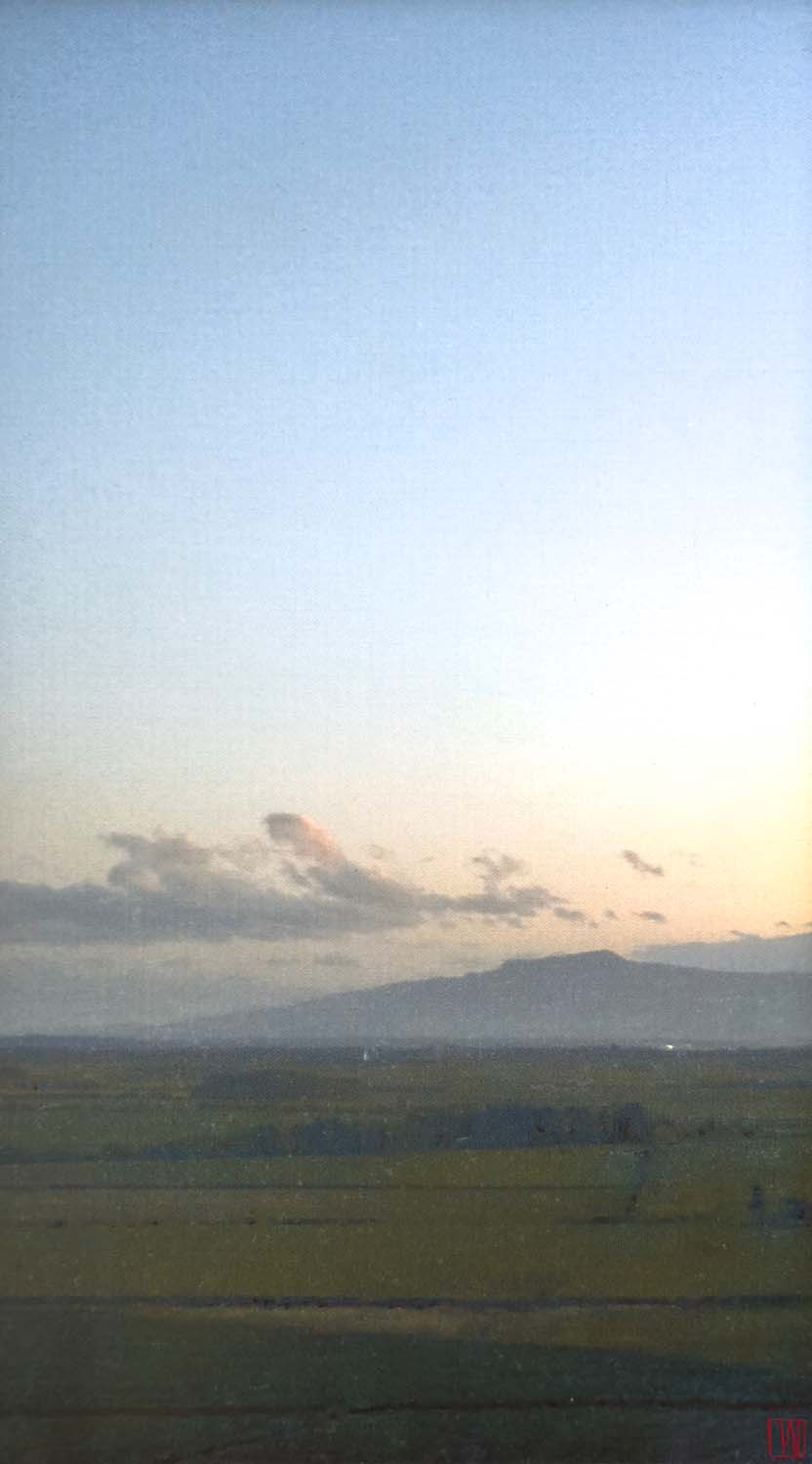
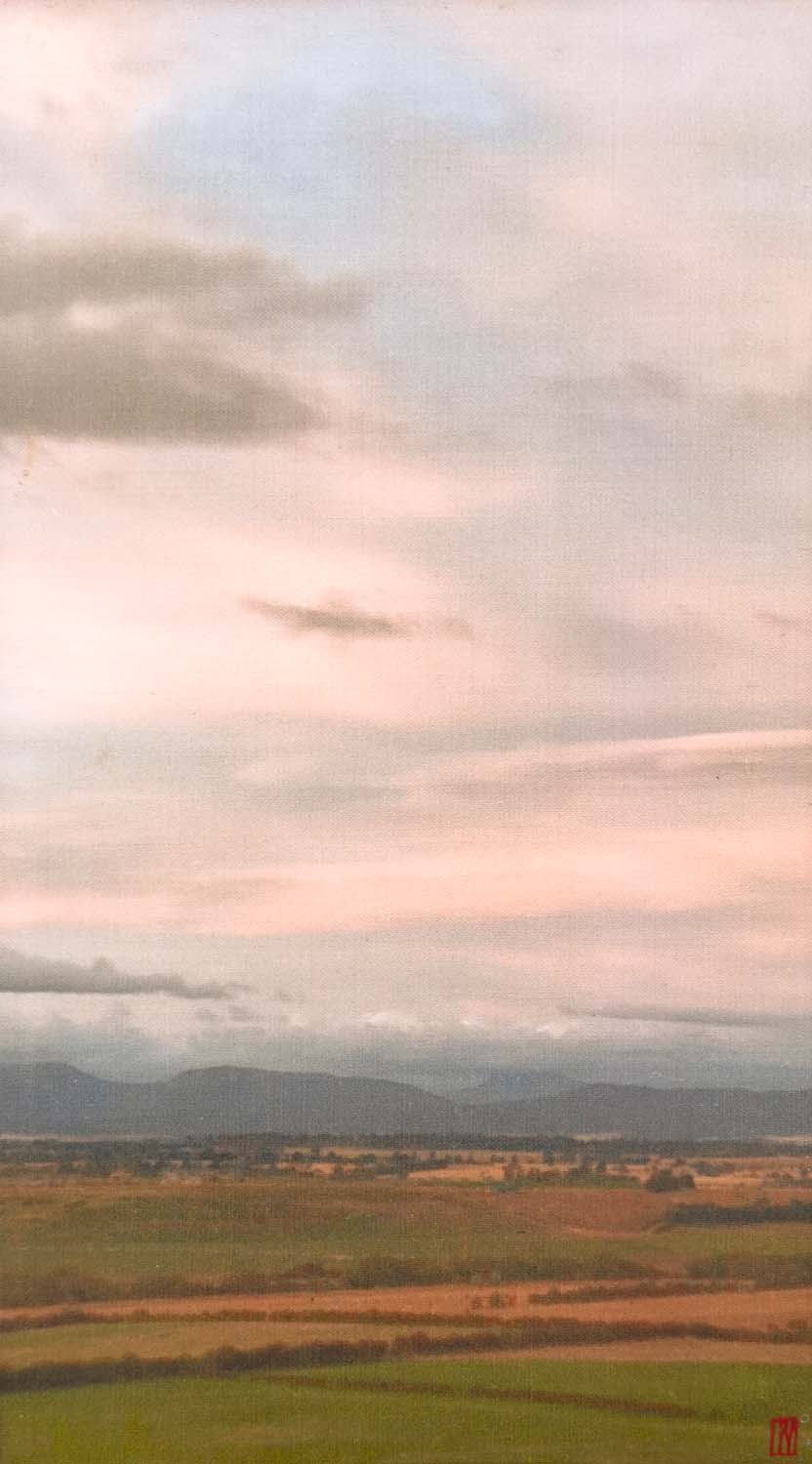
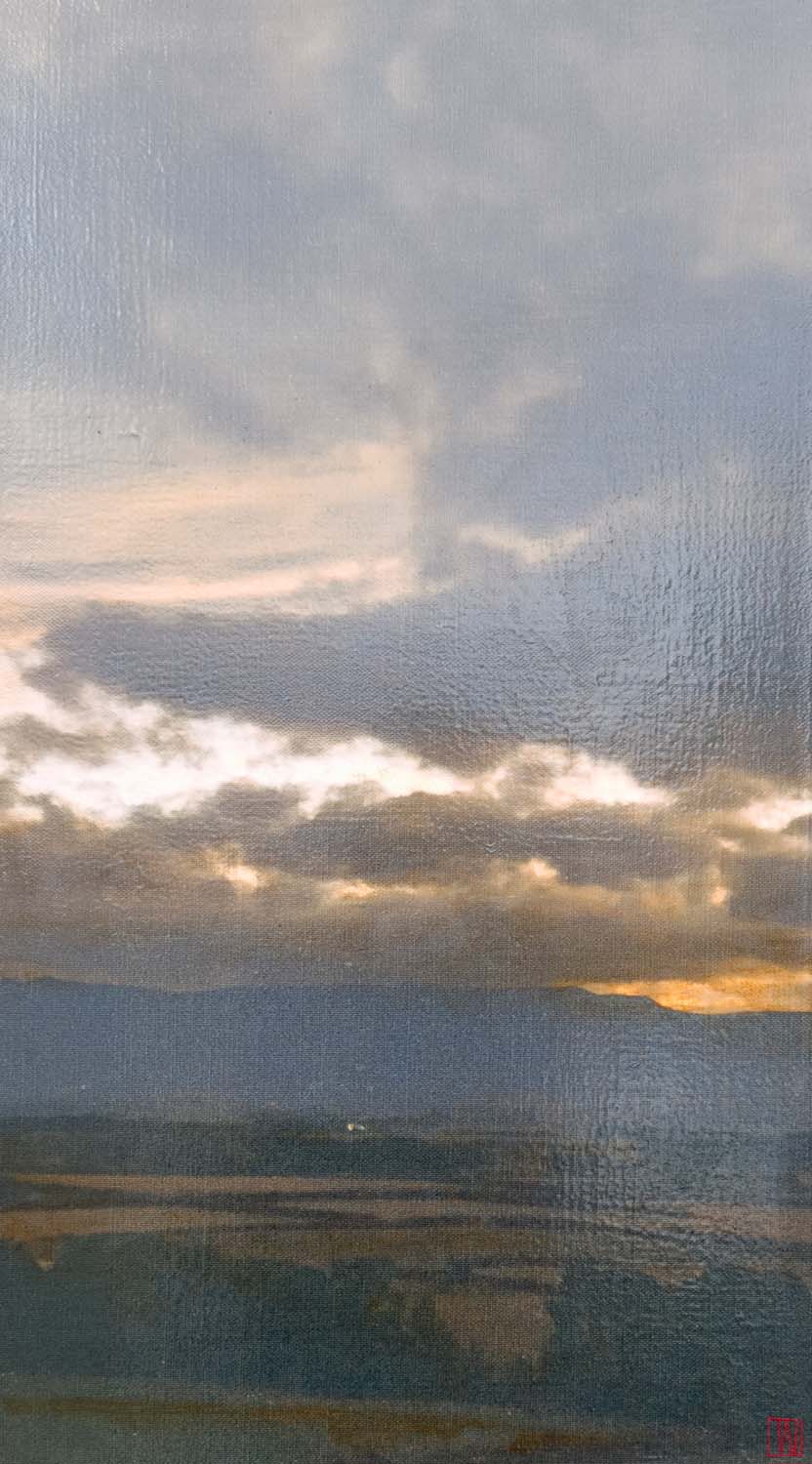
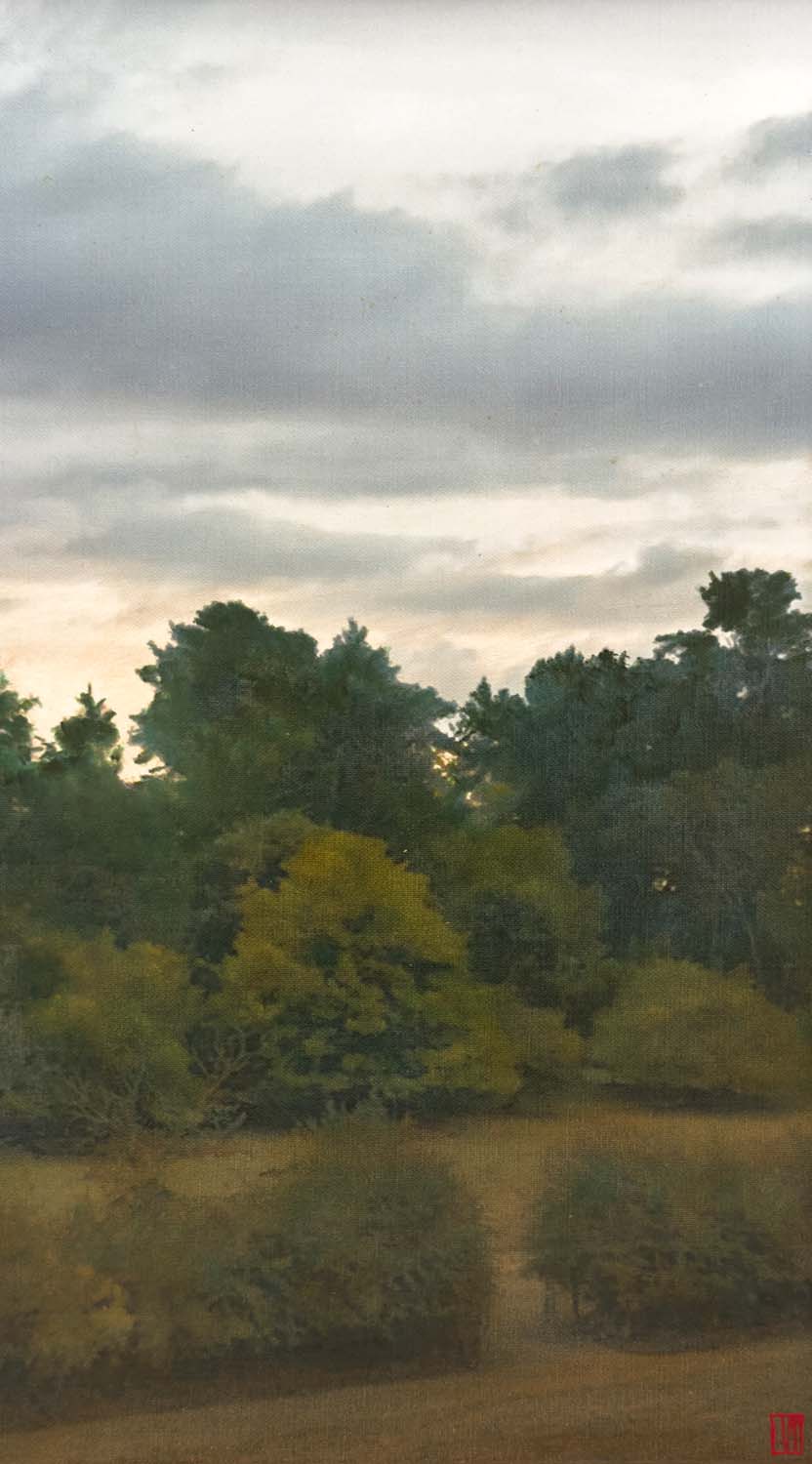
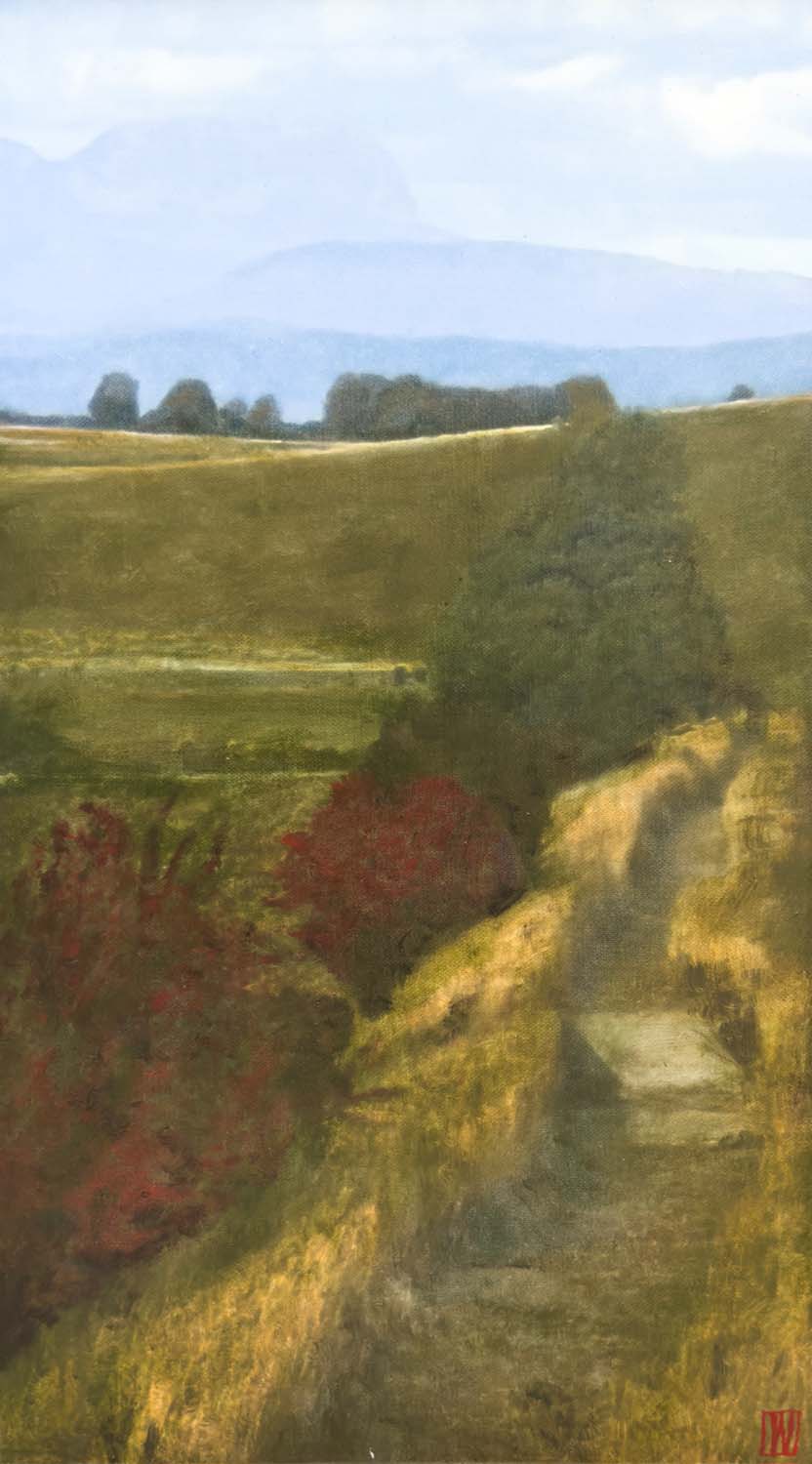
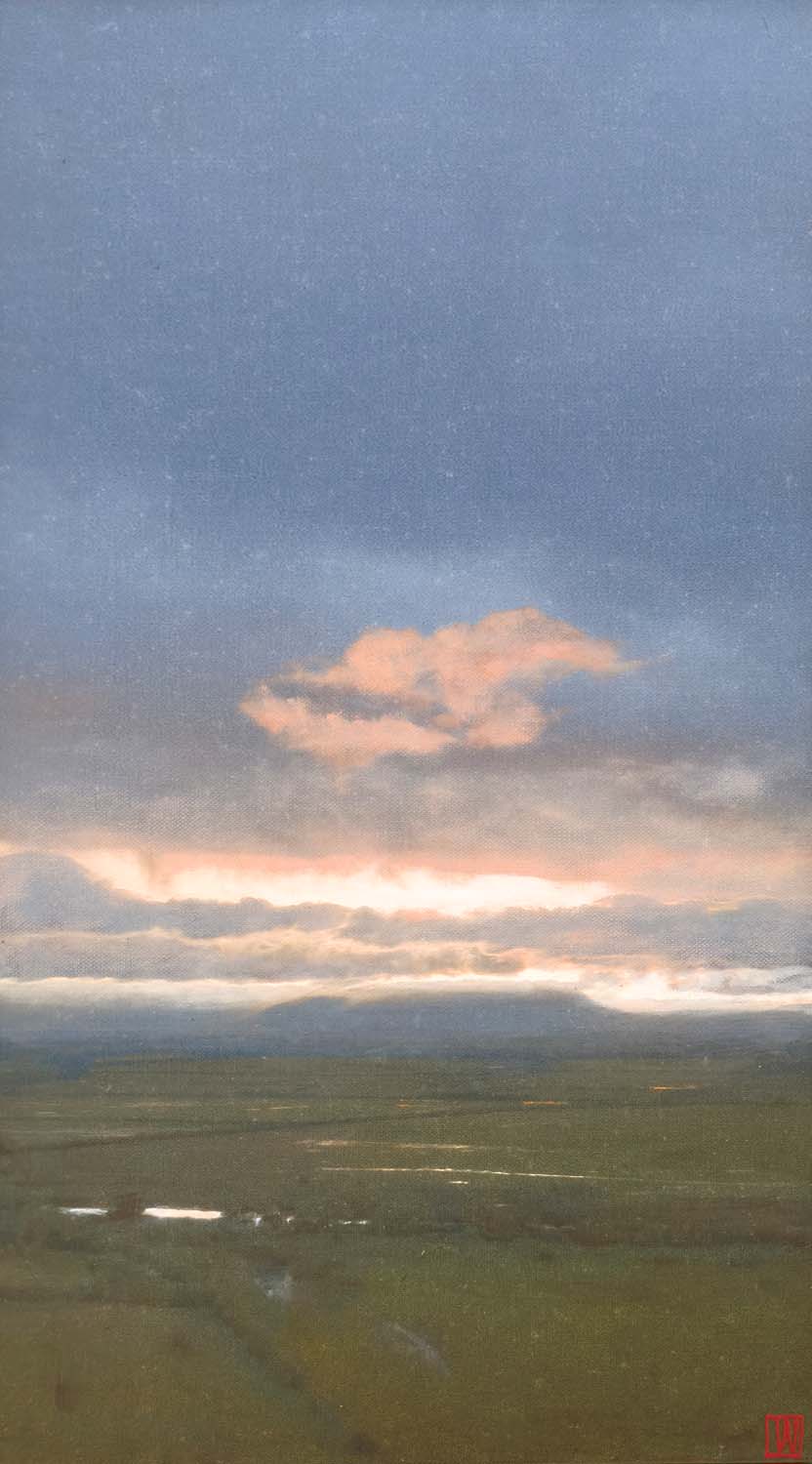
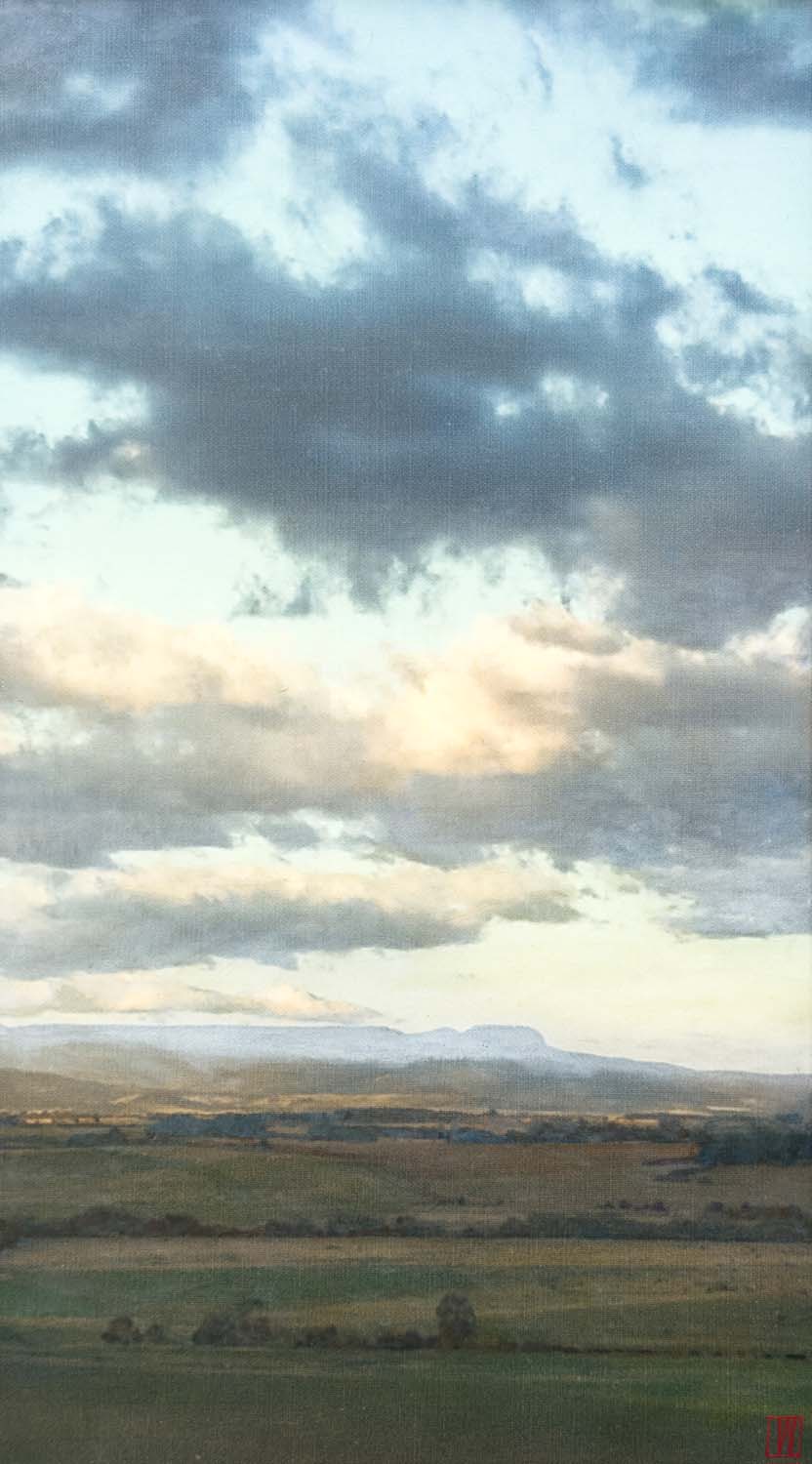
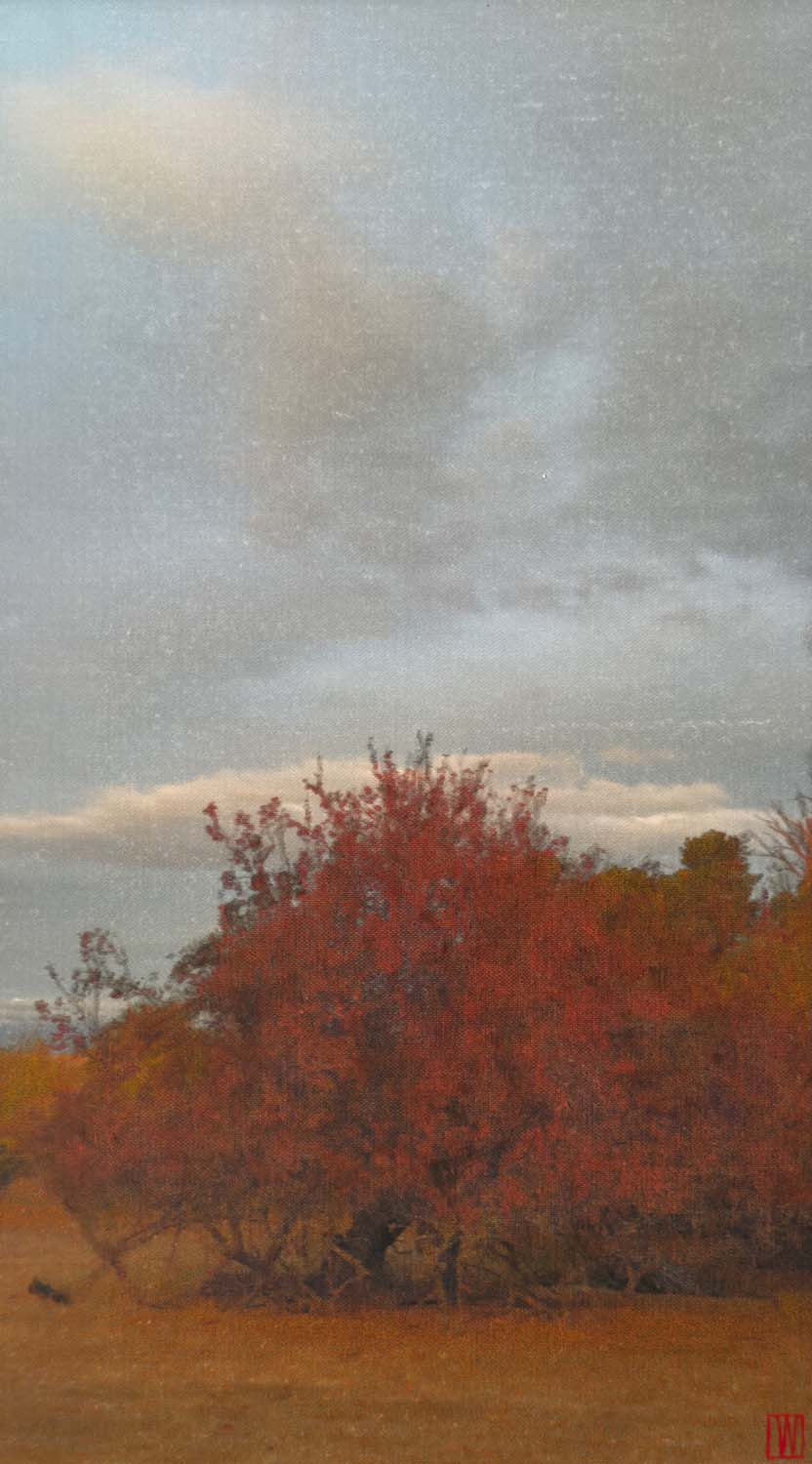
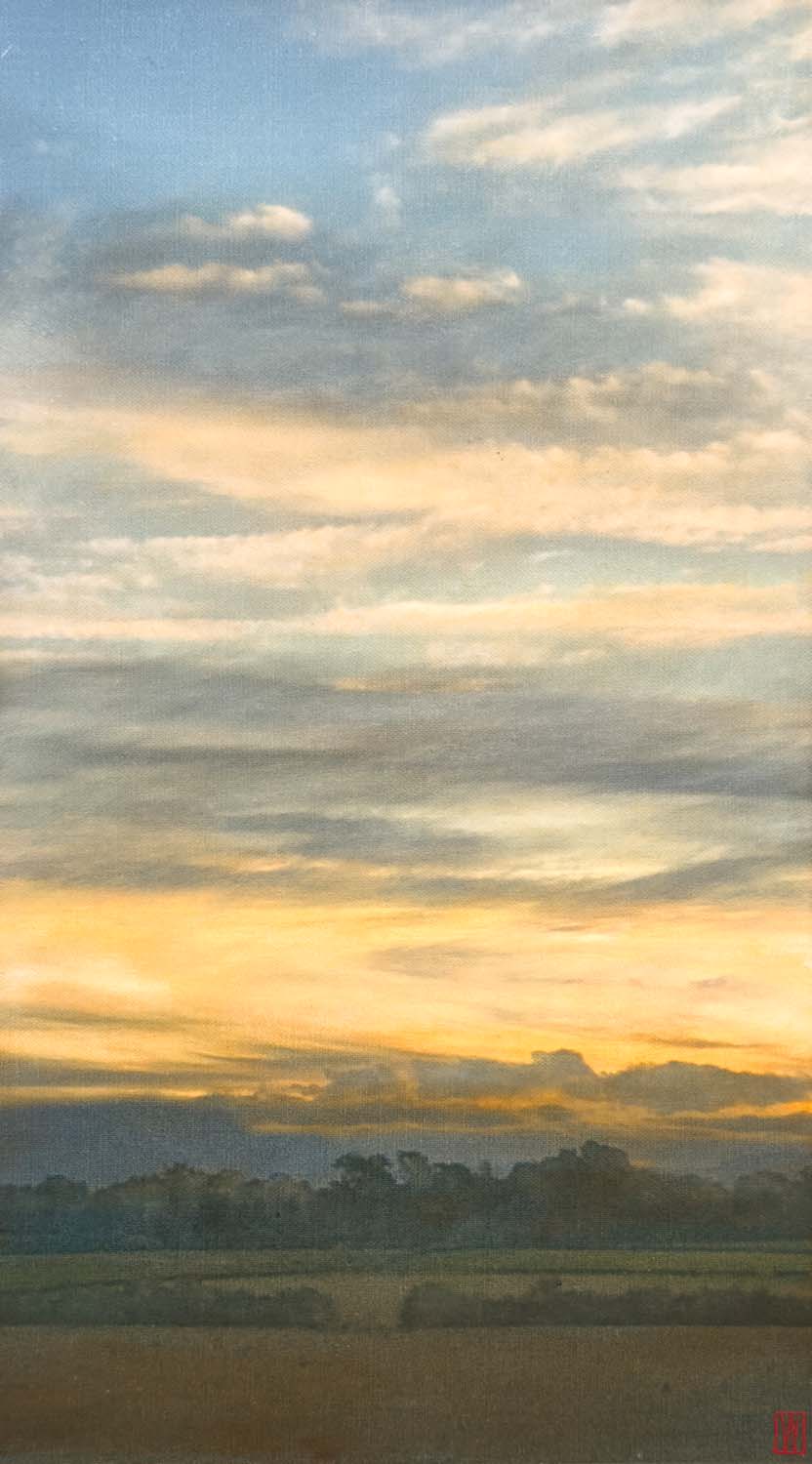
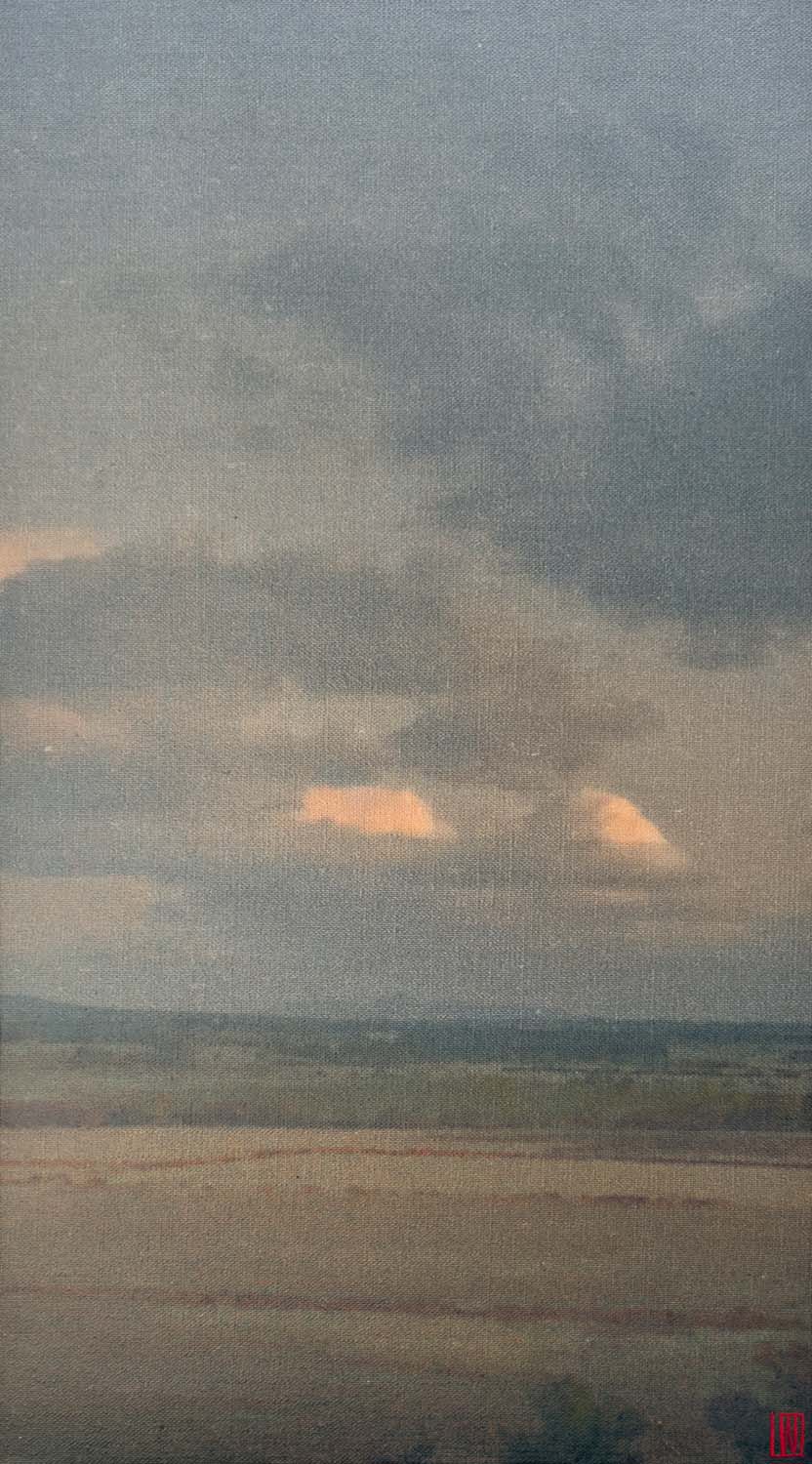
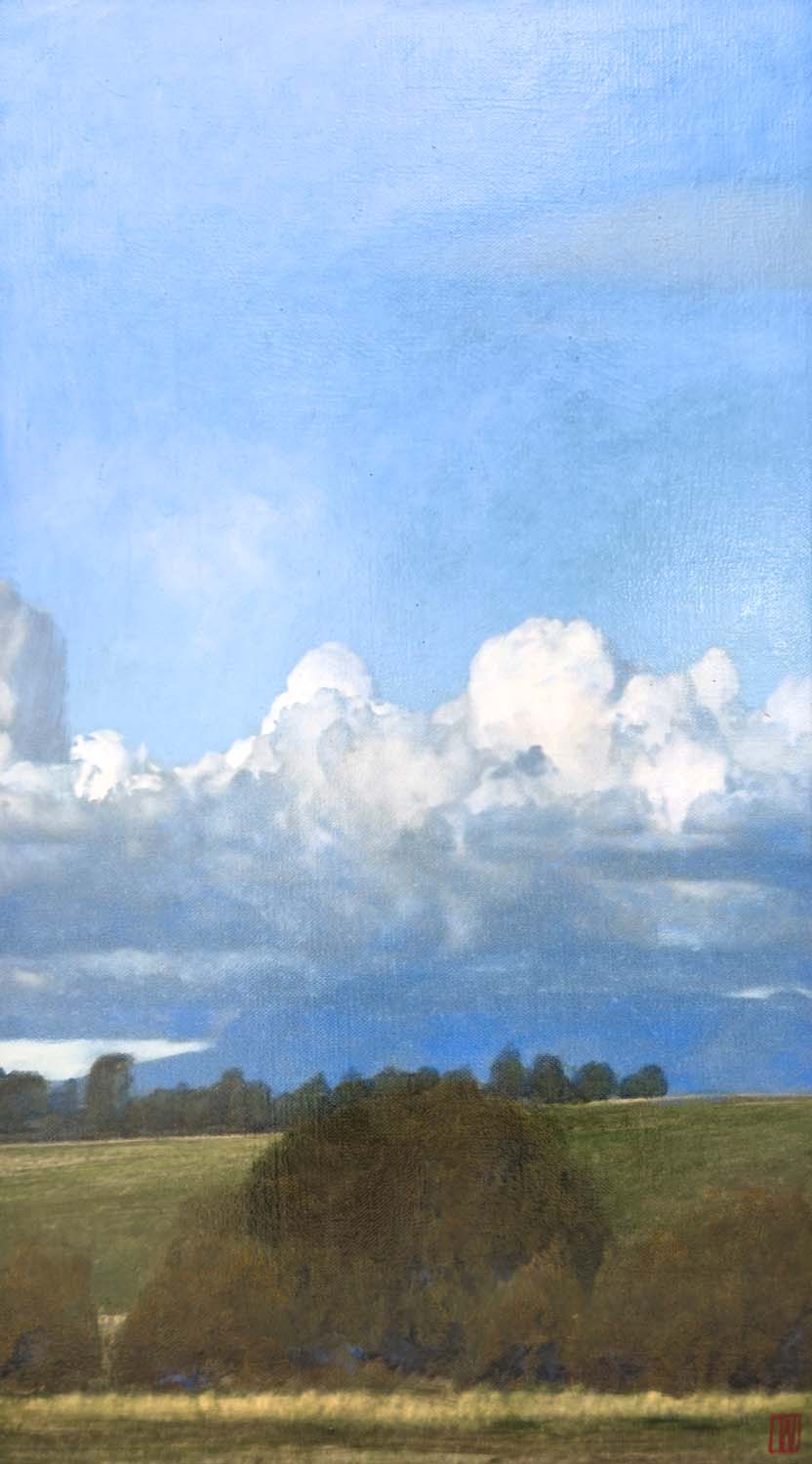
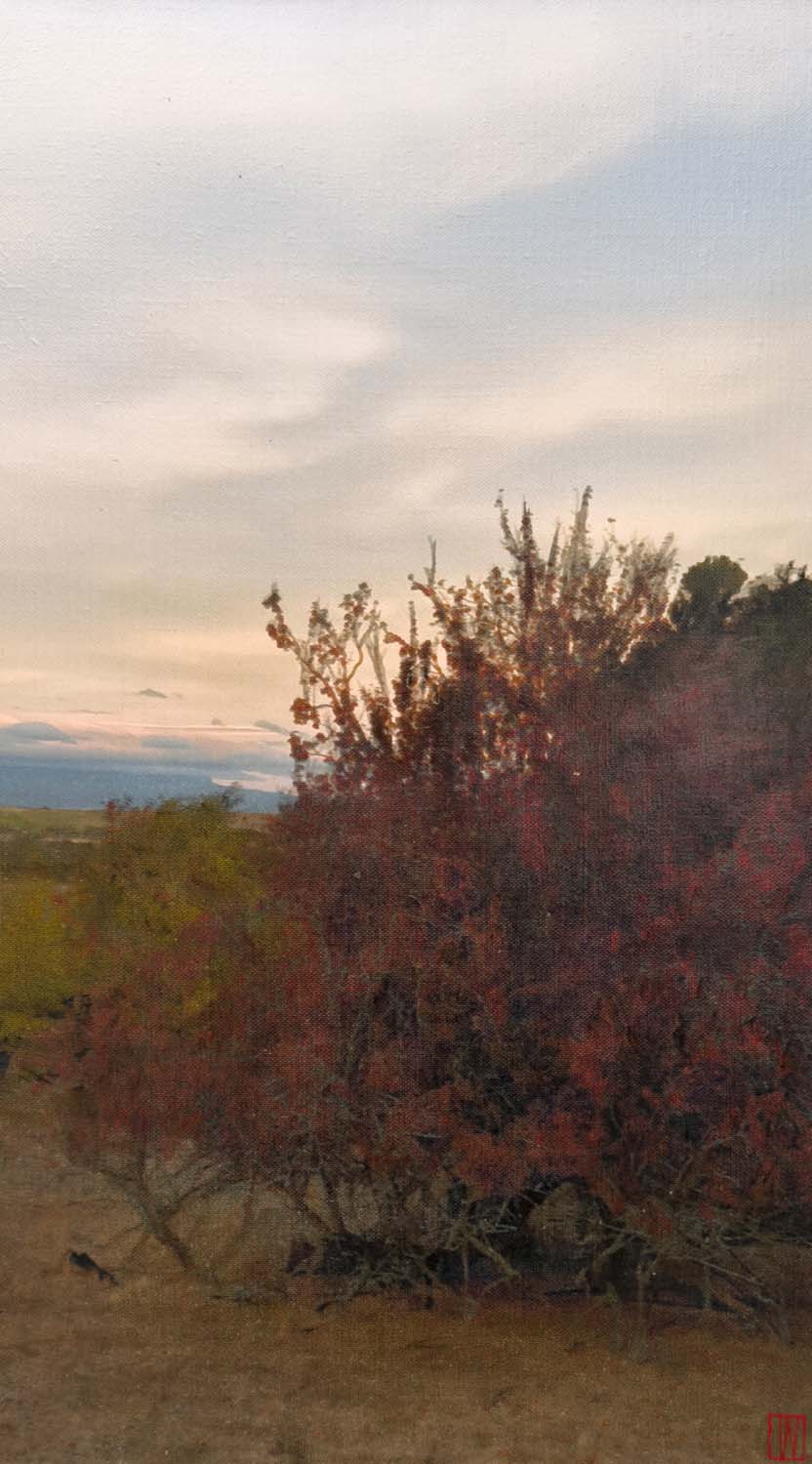
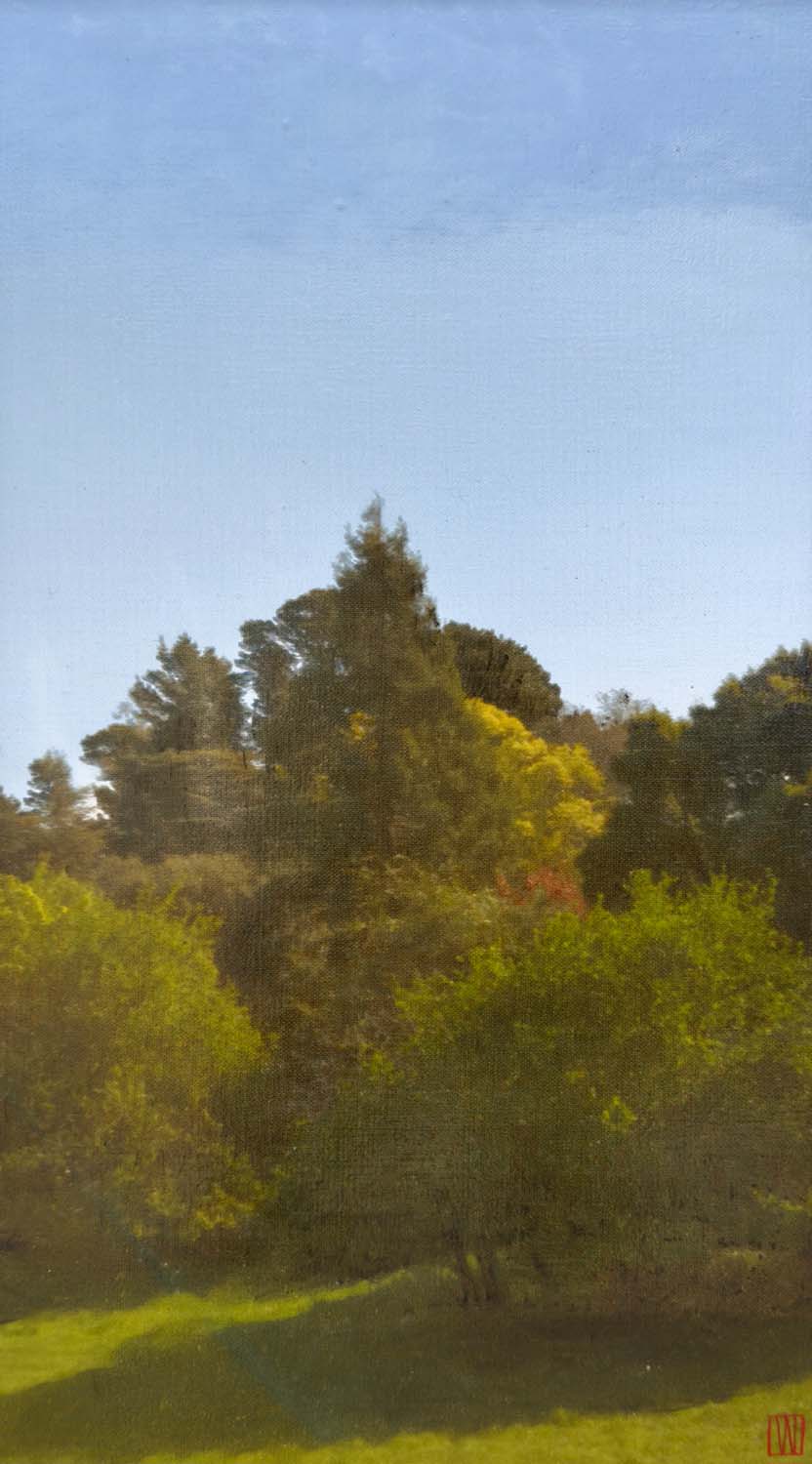
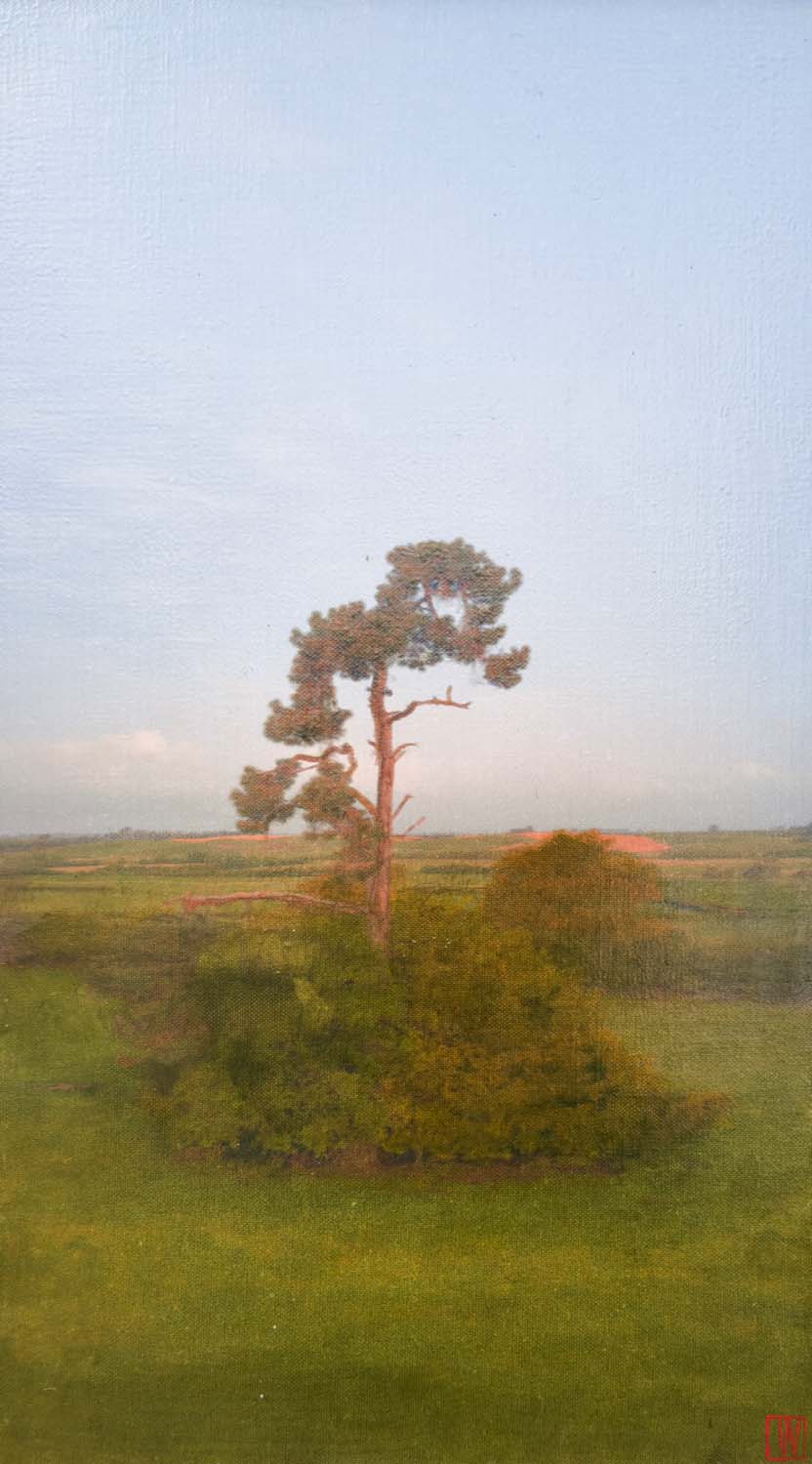
My painting practice is grounded in sustained engagement with the Tasmanian landscape and the lived experience of being within it over time. Tasmania is a place of quiet intensity: broad plains, distant mountain ranges, coastal light, and expansive skies that continually shift with weather and season. I am drawn to these subtle changes and to moments when the land appears suspended — particularly at dawn and dusk — when form softens and atmosphere becomes dominant.
I work intuitively, using thin glazes of oil paint and dry brush scumble onto textured linen. This process allows me to build layered, smooth surfaces that hold light and resist precise description. Rather than recording specific locations, I aim to evoke the emotional and temporal qualities of place. Reduced palettes, muted tones, and blurred edges are used to slow the image down, encouraging contemplation and sustained looking.
Much of my work returns to familiar Tasmanian sites, especially open agricultural plains and transitional landscapes shaped by both natural forces and human use. These places carry layered histories — Aboriginal, colonial, and contemporary — that are rarely visible but deeply felt. I am interested in how painting can quietly acknowledge these histories without illustration or narrative, allowing them to emerge through mood, tone, and spatial tension.
Landscape painting, for me, is a way of thinking through place rather than describing it. It is a reflective practice shaped by repetition, memory, and attention. By returning to the same environments, I build a visual language that reflects duration and familiarity rather than novelty.
Ultimately, my paintings seek to create a calm, open space for viewers to encounter Tasmania’s landscape through light, silence, and restraint. They are invitations to pause, to sense time passing, and to consider our relationship to land as something ongoing, fragile, and deeply embedded in experience.